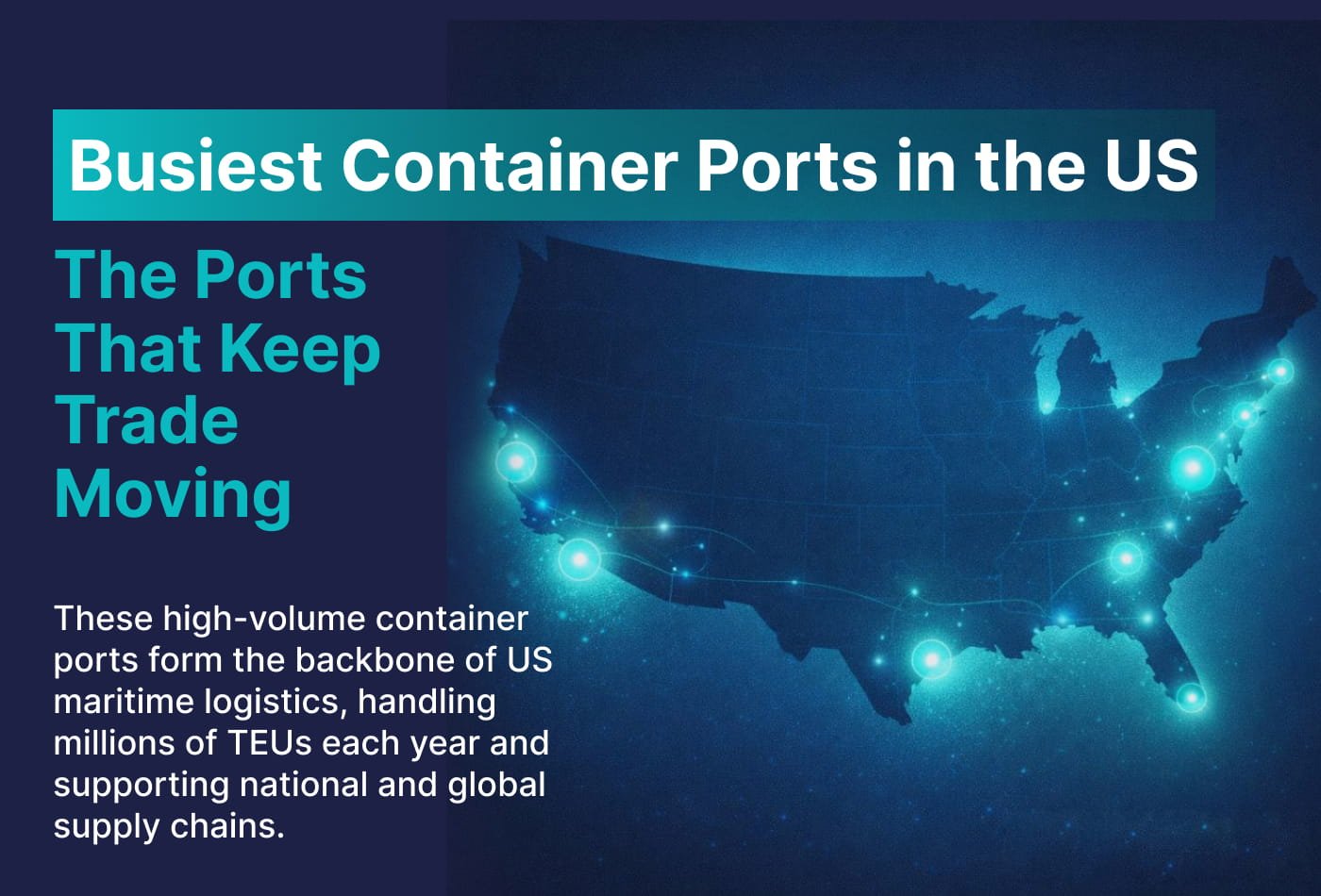
The United States has one of the world’s most complex and high-volume maritime logistics networks. When we talk about the busiest ports in the US, we’re typically referring to how many containers (TEUs) a port handles—the primary measure of containerized trade. This reflects the flow of goods into and out of the country, touching everything from retail products to industrial supplies.
What counts as “Busiest”?
Busiest” can mean different things:
- Container volume (TEUs) -most common for trade and logistics analysis.
- Total cargo tonnage -includes bulk commodities, not just containers.
- Vessel calls- number of ship arrivals/departures.
This article focuses on container activity, as containerized trade is the core of global shipping and most often used to rank the busiest shipping ports in the US.
U.S. Busiest Container Ports (Latest Data)
1. Port of Los Angeles (California) - Top Container Port
The Port of Los Angeles consistently ranks as the busiest container port in the US, handling over 10 million TEUs in recent reporting. It serves as the main gateway for trade with Asia-Pacific markets and drives huge volumes of consumer goods, electronics, and retail imports.
Key Notes
- Highest annual container volume in the United States.
- Handles mega-ships and has extensive rail connections inland.
2. Port of Long Beach (California) - Major Trade Hub
Located next to Los Angeles, the Port of Long Beach regularly ranks second in container throughput. Its proximity to the LA port and joint logistics infrastructure makes it a vital part of US container trade.
Key Notes
- Often handles between 9–9.6+ million TEUs annually.
- Together with LA, these ports move around 40% of all containerized goods entering the U.S.
3. Port of New York & New Jersey (East Coast Leader)
This is the busiest container port on the East Coast and typically ranks third nationally. With access to the northeastern consumer markets and strong rail links, it’s a strategic hub for imports and exports alike.
Key Notes
- Around 8.7+ million TEUs were handled in the latest reports.
- Major gateway for Europe and trans-Atlantic trade routes.
4. Port of Savannah (Georgia)
Savannah is one of the fastest-growing container ports in the US and has risen into the top ranks thanks to rapid infrastructure expansion and inland freight links.
Key Notes
- Strong intermodal rail connections into the Southeast Midwest.
- Handles over 5 million TEUs annually.
5. Port of Houston (Texas)
A key Gulf Coast container port, Houston plays a critical role in both import and export cargo, particularly energy-related goods and petrochemical products.
Key Notes
- Handles over 4+ million TEUs, with strong import/export mix.
Other Notable Container Ports in the US
| Port | Approx. TEUs (2024) | Notes |
| Port of Virginia (Norfolk) | 3.5M |
Gateway for Mid-Atlantic and Midwest markets. |
| Seattle-Tacoma (NWSA) | 3.3M |
Northwest hub for Asia trade. |
|
South Carolina Ports (Charleston) |
2.5M | Strong automotive and retail flows. |
|
Port of Oakland |
2.26M | West Coast trade in Northern California. |
|
Port of Jacksonville (JAXPORT) |
1.34M | Florida’s major container hub. |
Busiest Shipping Ports vs. Busiest Container Ports in the US
- Busiest container ports focus on TEU volumes — the number of standardized containers loaded/unloaded.
- Busiest shipping ports overall may include bulk cargo like oil, grain, coal, and other goods measured by tonnage. Ports like Corpus Christi, Louisiana Offshore Oil Port (LOOP), or Port of South Louisiana lead in bulk tonnage but may not be top container hubs.
Trends: Seasonality, Policies & Volume Shifts
1. Seasonal Changes
Volumes can fluctuate throughout the year due to holiday retail demand, agriculture exports, and liner schedules. Peak seasons (e.g., pre-holiday imports) often see higher container traffic.
2. Trade Policies & Tariffs
Tariffs, trade agreements, and trade war uncertainties impact port volumes in the short term. For example, ports experienced import surges ahead of tariff changes as shippers accelerated cargo movement.
3. Metrics Can Vary
Different sources list different “busiest” ports because some rank by TEUs, others by tonnage or ship arrivals, and still others by trade value.
FAQs — Busiest Ports in the US
1. Which is actually the busiest port in the United States right now?
The Port of Los Angeles generally holds the title based on container volume (TEUs), making it the busiest container port in the country.
2. Why do different sources list different US ports as the busiest?
Because some rank by containers (TEUs), others by total cargo tonnage, number of ship calls, or trade value, which produces different port rankings.
3. Do the busiest ports in the US change depending on the time of year?
Yes. Trade seasonality—with peaks in holiday import periods or crop export seasons—can shift monthly rankings, even if annual leaders remain consistent.
4. How do tariffs or trade policies affect activity at the busiest US ports?
Tariffs and trade policy shifts can spur cargo rushes ahead of implementation deadlines, temporarily boosting port volumes as shippers expedite shipments.
5. Are US ports like Los Angeles and Long Beach always the busiest, even with trade wars?
They typically remain top container ports due to infrastructure, hinterland connections, and trade lanes, though short-term trade disruptions can impact volume patterns.
6. Which US ports have the most ship arrivals in a given period?
Ports like Los Angeles, Long Beach, Savannah, and Houston often lead in ship arrivals, but rankings shift depending on seasonal traffic and shipping schedules.
7. Is the busiest US port different for containers versus other cargo types?
Yes. Ports leading in container traffic (like LA and Long Beach) differ from those leading in bulk cargo tonnage (such as Corpus Christi or South Louisiana).
Share Your Thoughts
Post


 Continue with Google



 Get instant quote
and compare offers in real time
Get instant quote
and compare offers in real time