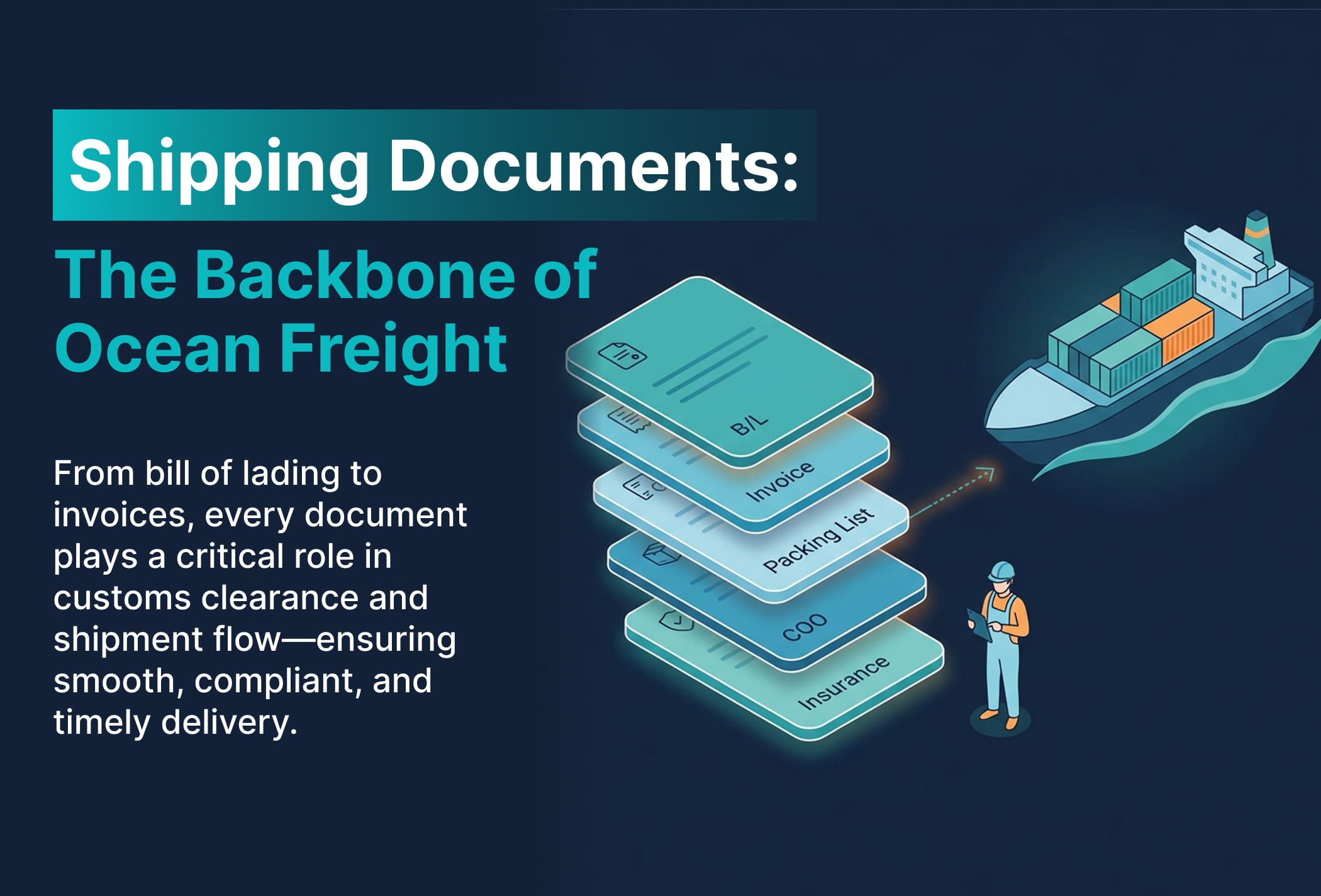
In international logistics, documentation plays a critical role in ensuring smooth cargo movement across borders. When using an ocean freight service, having the correct paperwork in place is essential to avoid delays, penalties, or shipment rejections.
From customs clearance to cargo release, every stage of the shipping process depends on accurate and complete documentation.
Why Documentation is Important in Ocean Freight
Shipping documents serve as the backbone of global trade operations. They provide essential information about the cargo, its origin, ownership, and compliance with international regulations.
- Proper documentation helps:
- Ensure smooth customs clearance at both origin and destination
- Act as proof of shipment and ownership
- Prevent legal and regulatory issues
- Facilitate coordination between shippers, carriers, and consignees
- Avoid costly delays and penalties
Even a minor error in documentation can lead to shipment holds, additional charges, or compliance issues.
Key Documents Required
Here are the most important documents required for ocean freight shipping:
1. Bill of Lading (B/L)
A crucial document issued by the carrier, serving as a contract of carriage and proof of shipment. It also acts as a title of goods.
2. Commercial Invoice
Provides details about the goods, including value, description, and terms of sale. It is used for customs valuation.
3. Packing List
Specifies the contents, weight, dimensions, and packaging details of the shipment.
4. Certificate of Origin
Indicates the country where the goods were manufactured and may be required for trade agreements or tariffs.
5. Export/Import Licenses
Necessary for regulated or restricted goods depending on country-specific regulations.
6. Insurance Certificate
Proof that the cargo is insured against potential risks during transit.
7. Shipping Instructions
Details provided by the shipper to the carrier for handling and transporting the cargo.
Having these documents prepared accurately ensures a seamless shipping process.
Common Documentation Errors
Mistakes in shipping documents are one of the leading causes of delays in ocean freight. Some common errors include:
- Incorrect or incomplete consignee details
- Mismatch between invoice and packing list information
- Wrong HS (Harmonized System) codes
- Missing signatures or stamps
- Inaccurate cargo descriptions
- Late submission of documents
Such errors can result in customs holds, fines, or even shipment rejection.
Tips for Smooth Documentation
To ensure hassle-free shipping, businesses should follow these best practices:
- Double-check all details before submission
- Standardize documentation processes across shipments
- Use digital tools to reduce manual errors
- Stay updated with regulations for different countries
- Work with experienced freight partners for guidance
- Maintain proper records for compliance and audits
A proactive approach to documentation minimizes risks and improves overall supply chain efficiency.
Conclusion
Accurate documentation is essential for successful ocean freight shipping. From the bill of lading to customs paperwork, each document plays a vital role in ensuring that goods move smoothly across international borders.
By understanding the required documents, avoiding common errors, and following best practices, businesses can streamline their logistics operations and prevent costly disruptions—making ocean freight a more reliable and efficient shipping solution.
Share Your Thoughts
Post


 Continue with Google



 Get instant quote
and compare offers in real time
Get instant quote
and compare offers in real time