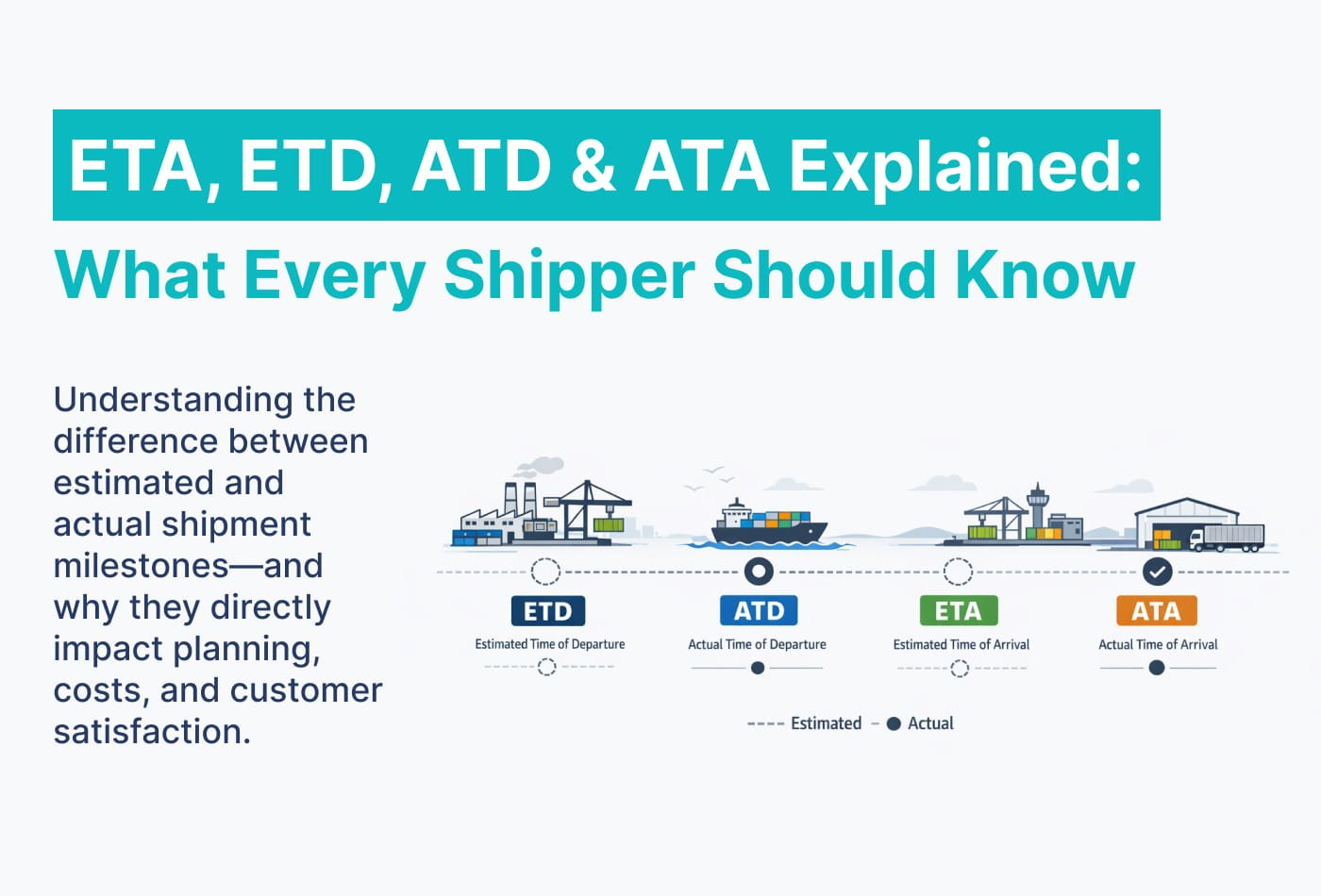
In global logistics, timelines are everything. Whether you are moving cargo by ocean, air, rail, or road, understanding key shipment milestones helps you plan inventory, manage customer expectations, and avoid costly delays.
Four of the most commonly used tracking terms in shipping are ETA, ETD, ATD, and ATA. While they may look similar, each represents a different stage in the shipment journey. Here’s a clear and practical breakdown of what they mean and why they matter.
1. ETA – Estimated Time of Arrival
ETA (Estimated Time of Arrival) refers to the expected date and time when a vessel, aircraft, truck, or shipment is projected to arrive at its destination.
Where ETA Is Used:
- Port of discharge
- Final delivery warehouse
- Transshipment hub
- Airport arrival
Why ETA Matters:
- Helps importers plan customs clearance
- Allows warehouses to prepare for unloading
- Supports inventory forecasting
- Keeps customers informed about delivery timelines
Keep in mind that ETA is an estimate. It can change due to weather disruptions, port congestion, customs delays, or operational issues.
2. ETD – Estimated Time of Departure
ETD (Estimated Time of Departure) indicates when a vessel, aircraft, or truck is expected to leave the origin port or terminal.
ETD Is Important For:
- Planning container gate-in deadlines
- Coordinating trucking schedules
- Managing factory dispatch timelines
- Aligning production with shipment cut-offs
Exporters closely monitor ETD to ensure cargo is delivered to the port before cut-off times. Missing the ETD can result in rollover to the next sailing.
3. ATD – Actual Time of Departure
ATD (Actual Time of Departure) confirms the real departure time of the shipment from the port or terminal.
This is not an estimate—it reflects when the carrier physically left.
Why ATD Is Crucial:
- Confirms shipment is officially in transit
- Helps update revised ETAs
- Supports performance tracking
- Reduces uncertainty for buyers
Once ATD is recorded, supply chain teams can more accurately calculate transit time and adjust delivery commitments.
4. ATA – Actual Time of Arrival
ATA (Actual Time of Arrival) indicates the actual time the shipment arrives at its destination port, airport, or delivery location.
This milestone is critical because it triggers the next stages:
- Customs clearance
- Port handling and unloading
- Inland transportation
- Final delivery
Why ATA Matters:
- Determines demurrage and detention timelines
- Impacts warehouse scheduling
- Affects downstream distribution
- Confirms transit performance
Delays between ETA and ATA often highlight congestion, weather, or operational bottlenecks.
Estimated vs Actual: What’s the Difference?
The key distinction lies between estimated and actual milestones:
| Term | Meaning | Type |
|
ETD |
Planned Departure | Estimate |
|
ATD |
Confirmed Departure | Actual |
|
ETA |
Planned Arrival | Estimate |
|
ATA |
Confirmed Arrival | Actual |
Estimated times help in planning. Actual times confirm performance.
How These Terms Impact Supply Chain Planning
Understanding ETA, ETD, ATD, and ATA is not just about tracking shipments—it’s about managing risk and optimizing operations.
1. Inventory Planning
Accurate ETAs allow businesses to avoid stockouts or overstocking.
2. Production Scheduling
Manufacturers rely on shipment timelines for raw material arrivals.
3. Cost Management
Delays can lead to:
- Demurrage charges
- Detention fees
- Storage costs
- Missed delivery penalties
4. Customer Communication
Real-time updates build trust and reduce uncertainty.
Common Reasons ETA and ETD Change
Shipping schedules are dynamic. Changes can happen due to:
- Port congestion
- Adverse weather conditions
- Vessel blank sailings
- Customs inspections
- Equipment shortages
- Labor strikes
That’s why logistics teams track both estimated and actual milestones closely.
Example: How These Milestones Work Together
Let’s say a container is shipping from Mumbai to Rotterdam.
- ETD Mumbai: 5 March
- ATD Mumbai: 6 March
- ETA Rotterdam: 28 March
- ATA Rotterdam: 30 March
In this case:
- The shipment departed one day late.
- It arrived two days later than planned.
These differences help evaluate carrier reliability and improve future planning.
Why Tracking Accuracy Matters in Modern Logistics
With increasing global trade complexity, real-time tracking and milestone accuracy are more important than ever. Businesses now rely on:
- Digital freight platforms
- Automated alerts
- AI-based ETA predictions
- Integrated supply chain dashboards
Accurate milestone data improves transparency across the entire logistics chain.
Frequently Asked Questions
Is ETA guaranteed?
No. ETA is an estimate and can change due to operational or external factors.
Can ATD be earlier than ETD?
Yes. If operations move faster than expected, departure may occur earlier.
Does ATA trigger customs clearance?
Yes. Customs processes typically begin once the shipment arrives and is registered at the port or airport.
Are these terms used only in ocean freight?
No. ETA, ETD, ATD, and ATA are used across ocean, air, rail, and road transportation.
Final Thoughts
ETA, ETD, ATD, and ATA are foundational terms in shipping and logistics. While they may seem simple, they play a critical role in planning, coordination, cost control, and customer satisfaction.
Understanding the difference between estimated and actual milestones allows businesses to:
- Improve operational efficiency
- Minimize delays and penalties
- Enhance visibility across supply chains
- Make smarter logistics decisions
Clear timeline tracking isn’t just about knowing where cargo is—it’s about knowing what to do next.
Share Your Thoughts
Post


 Continue with Google



 Get instant quote
and compare offers in real time
Get instant quote
and compare offers in real time