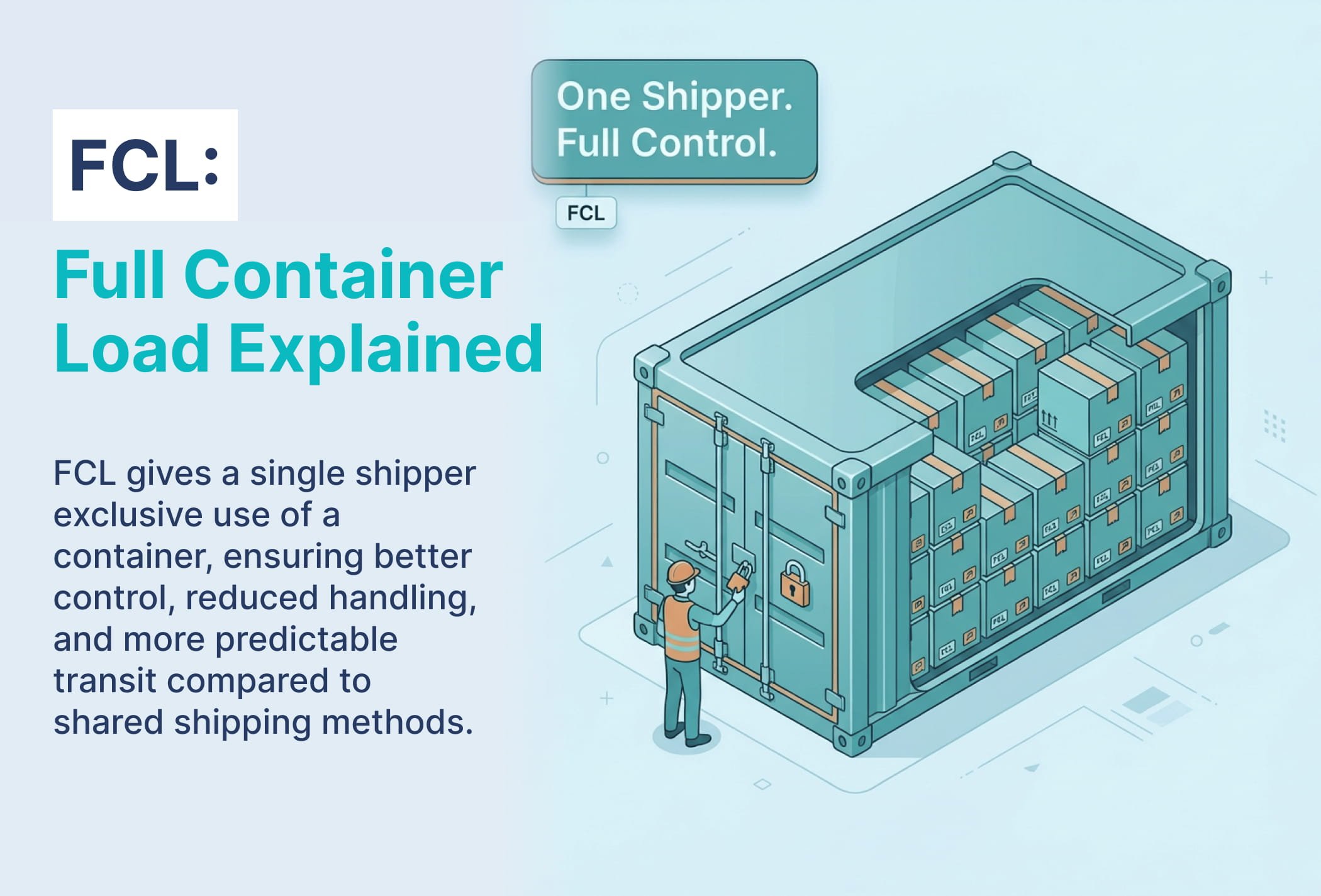
In global logistics, understanding shipping terms is essential for making the right decisions. One of the most commonly used terms is FCL Meaning in Shipping, which plays a key role in how goods are transported internationally.
FCL shipping is widely used by businesses dealing with large volumes of cargo, offering better control, efficiency, and cost advantages in many scenarios. Let’s break it down in a simple and practical way.
What Does FCL Stand for in Shipping?
FCL stands for Full Container Load, which means a single shipper uses an entire container exclusively for their goods.
Unlike shared shipping methods, FCL gives businesses full control over the container, reducing risks associated with handling and delays. It is typically used when the shipment volume is large enough to fill or nearly fill a container.
Key highlights of FCL:
- One shipper, one container
- No cargo mixing with other shipments
- Better security and lower risk of damage
- More predictable transit timelines
How FCL Shipping Works Step-by-Step
FCL shipping follows a structured process from origin to destination:
1. Booking the Container
The shipper books a full container with a carrier or freight forwarder based on cargo requirements.
2. Container Stuffing
Goods are packed and loaded into the container at the shipper’s warehouse or a designated facility.
3. Inland Transport
The sealed container is transported to the port via truck or rail.
4. Export Customs Clearance
Documents are submitted, and the cargo is cleared for export.
5. Ocean Transit
The container is loaded onto a vessel and transported to the destination port.
6. Import Customs Clearance
Upon arrival, the shipment undergoes customs clearance at the destination.
7. Final Delivery
The container is delivered to the consignee’s location for unloading.
This streamlined process ensures minimal handling and better cargo safety.
Why FCL is Used in International Trade
FCL is a preferred choice for many businesses due to its efficiency and reliability in global trade.
Key Benefits:
- Cost Efficiency for Bulk Cargo: Lower cost per unit when shipping large volumes
- Faster Transit: No delays from consolidation or deconsolidation
- Reduced Risk: Minimal handling lowers chances of damage or loss
- Better Control: Shippers have full control over loading and sealing
These advantages make FCL ideal for industries that require consistent and large-scale shipping.
FCL vs Other Freight Methods Overview
FCL is often compared with other shipping methods like LCL (Less than Container Load) and air freight.
FCL vs LCL:
FCL is best for large shipments, while LCL is suitable for smaller volumes where sharing container space is more economical.
FCL vs Air Freight:
FCL is more cost-effective but slower, whereas air freight is faster but significantly more expensive.
Handling Differences:
FCL involves minimal handling, while LCL requires consolidation and multiple touchpoints.
Understanding these differences helps businesses choose the right shipping method based on cost, urgency, and cargo size.
When Businesses Typically Choose FCL
Businesses usually opt for FCL in the following scenarios:
- When shipping large volumes that can fill a container
- When cargo safety and security are a priority
- When faster transit (compared to LCL) is required
- When reducing per-unit shipping cost is important
- For high-value or sensitive goods requiring minimal handling
Conclusion
FCL (Full Container Load) is a fundamental concept in international shipping, offering efficiency, security, and cost advantages for large shipments. By understanding how FCL works and when to use it, businesses can optimize their logistics strategy and improve overall supply chain performance.
Choosing the right shipping method—whether FCL or alternatives—ultimately depends on your cargo size, budget, and delivery timelines.
Share Your Thoughts
Post


 Continue with Google



 Get instant quote
and compare offers in real time
Get instant quote
and compare offers in real time