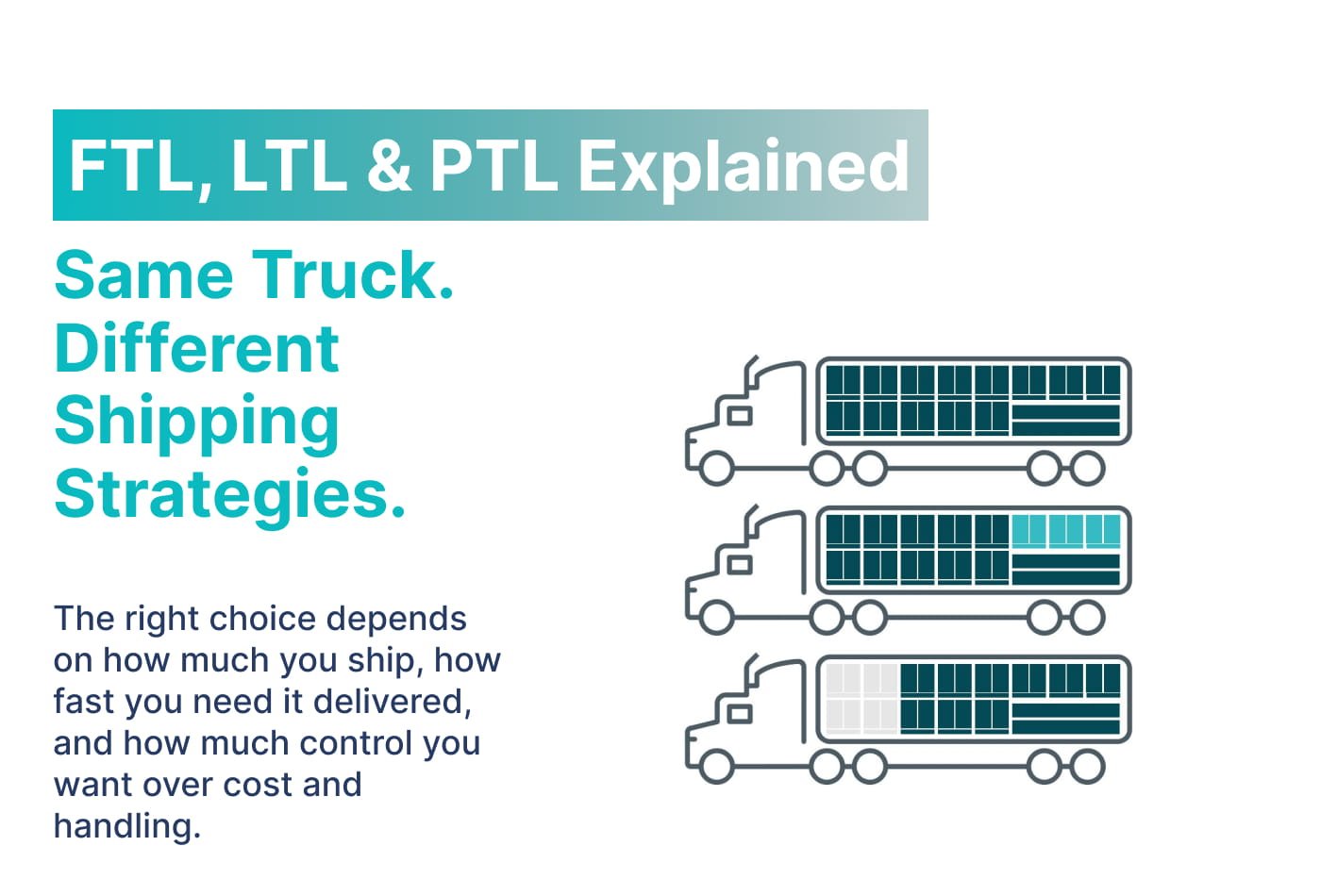
Choosing the right freight shipping method can make a noticeable difference to your business—both in terms of cost and delivery performance. Whether you are a growing eCommerce seller, a manufacturer moving bulk goods, or a distributor handling mixed shipments, understanding how freight transportation models work helps you avoid unnecessary expenses, delays, and operational headaches.
Three of the most common shipping models used in road freight today are FTL, LTL, and PTL. While they may sound similar, they serve very different needs. Many businesses often confuse these terms or assume one method is always better than the others. In reality, the “best” choice depends on your shipment size, urgency, budget, and handling requirements.
In this guide, we will break down each shipping method in simple terms, explain how they differ, and help you decide which one fits your logistics strategy best.
Understanding the Basics: What Do FTL, LTL, and PTL Mean?
Before comparing them, it’s important to understand what these abbreviations stand for.
FTL full form is Full Truck Load. This means one shipper books the entire truck exclusively for their cargo.
LTL full form is Less Than Truck Load. Here, multiple shippers share space in the same truck, each paying only for the portion they use.
PTL full form is Part Truck Load. PTL sits somewhere between FTL and LTL. You don’t need a full truck, but your shipment is large enough that it doesn’t behave like typical LTL cargo either.
There is also a term you might come across: ITL full form, which stands for Industrial Truck Load or sometimes Increased Truck Load, depending on context. While ITL is not as standardized as FTL or LTL, it is often used in regional logistics discussions when talking about high-volume commercial shipments.
What is FTL Shipping and When Should You Use It?
FTL shipping is best suited for businesses that have enough cargo to fill an entire truck—or at least want the truck to be used exclusively for their goods.
In FTL transport, the truck goes directly from the pickup point to the delivery location without multiple stops for other shippers. This means fewer handling points, lower chances of damage, and faster transit times.
Key Advantages of FTL
One of the biggest benefits of FTL is speed. Since there are no intermediate stops to load or unload other shipments, the delivery is typically much quicker.
Another advantage is security and reduced risk. Your cargo is not mixed with others, so the chances of loss, misplacement, or damage due to excessive handling are much lower.
FTL is also ideal for fragile, high-value, or sensitive goods that require careful handling or specific loading arrangements.
When FTL Makes Sense
FTL is usually the right option if:
- Your shipment can fill most or all of a truck
- You need faster transit times
- Your goods are fragile or high-value
- You want minimal handling
- You have strict delivery deadlines
The biggest downside of FTL is cost. You are paying for the entire truck, even if you don’t fully utilize the space. This makes FTL less economical for smaller shipments.
What is LTL Shipping?
LTL shipping is designed for smaller shipments that do not require a full truck. Multiple shippers share the same vehicle, each paying only for the space their cargo occupies.
This is one of the most widely used freight options for small and medium businesses that don’t ship large volumes daily.
How LTL Works
In LTL shipping, goods from various shippers are consolidated at hubs and distribution centers. The truck makes multiple stops to pick up and drop off cargo. Because of this, transit times are usually longer compared to FTL.
Advantages of LTL
The main advantage of LTL is cost efficiency. You only pay for the portion of the truck you use, which makes it a budget-friendly option for smaller shipments.
LTL is also flexible. You can ship smaller volumes more frequently without waiting to accumulate enough cargo for a full truck.
Limitations of LTL
Since LTL shipments are handled multiple times, the risk of damage can be slightly higher. Transit times can also be unpredictable because of multiple stops, consolidations, and route optimizations.
If speed, control, or special handling is critical, LTL might not always be the best choice.
What is PTL and How Is It Different?
Many people ask, what is a PTL shipment? PTL, or Part Truck Load, is a hybrid option between FTL and LTL.
PTL is typically used when your cargo is too large for LTL but not enough to justify a full truck. Unlike LTL, PTL shipments usually have fewer stops and less handling. Unlike FTL, you are not paying for the entire truck.
Why PTL Exists
PTL exists to bridge the gap between affordability and speed. It allows businesses to ship medium-sized loads without the premium cost of FTL and without the delays and heavy handling of LTL.
Advantages of PTL
- PTL shipments usually move faster than LTL because they have fewer consolidation points.
- They are also more economical than FTL if your cargo doesn’t fill an entire truck.
- Handling is minimized, which reduces the risk of damage compared to LTL.
LTL vs FTL vs PTL: A Practical Comparison
To choose wisely, it’s helpful to compare these methods across key factors.
Cost
LTL is the cheapest per shipment because costs are shared. PTL sits in the middle. FTL is the most expensive but offers exclusivity and speed.
Speed
FTL is the fastest since it moves directly from origin to destination. PTL is relatively fast, with limited stops. LTL is the slowest due to multiple transfers and stops.
Handling and Risk
FTL has the least handling and lowest risk of damage. PTL has moderate handling. LTL involves the most handling, increasing the risk of wear and tear.
Flexibility
LTL is very flexible for small, frequent shipments. PTL is flexible for mid-sized loads. FTL is best for large, planned shipments.
ITL vs FTL: Are They the Same?
Many people ask about ITL vs FTL. While FTL is a standardized global term, ITL can vary in meaning depending on region and service provider.
FTL always means a full truck reserved for a single shipper. ITL may refer to large industrial shipments that resemble FTL but might not always involve exclusive truck usage. It’s important to clarify with your logistics provider what exactly they mean by ITL.
How to Choose the Right Shipping Method
Instead of focusing only on cost, consider these practical questions:
- How large is your shipment?
- How urgently does it need to be delivered?
- Is your cargo fragile or high-value?
- Can you afford slight delays?
- Do you ship frequently or occasionally?
- If your shipment is large, urgent, or sensitive, FTL transport is likely the best choice.
If your shipment is small, non-urgent, and cost-sensitive, LTL makes more sense.
If your shipment is mid-sized and you want a balance of speed and cost, PTL is often the smartest option.
Why the Right Choice Matters More Than You Think
Many businesses lose money not because freight is expensive, but because they choose the wrong shipping model. Overpaying for FTL when PTL would work, or choosing LTL for time-sensitive goods, can hurt customer satisfaction and profit margins.
A well-planned logistics strategy considers not just today’s shipment, but long-term patterns—frequency, growth, seasonality, and service expectations.
Final Thoughts
FTL, LTL, and PTL are not competitors—they are tools. Each one serves a specific purpose, and understanding how they work allows you to use them strategically rather than emotionally.
Instead of asking, “Which one is cheaper?” ask, “Which one fits my shipment best?”
That shift in thinking can save money, reduce stress, and improve delivery performance across your entire supply chain.
Frequently Asked Questions (FAQs)
1. Which is cheaper: FTL, LTL, or PTL?
LTL is generally the cheapest option for small shipments because you only pay for the space you use. PTL is moderately priced and works well for medium-sized shipments that don’t justify a full truck. FTL is the most expensive because you pay for the entire vehicle, but it offers faster delivery, less handling, and better security. The “cheapest” option depends on your shipment size, urgency, and risk tolerance.
2. How do I know if my shipment should go via PTL or LTL?
If your shipment is small, lightweight, and not urgent, LTL is usually fine. But if your cargo is bulky, occupies a large portion of the truck, or requires quicker delivery with fewer touchpoints, PTL is the better choice. PTL is ideal when LTL feels too slow or risky, but FTL feels unnecessary and expensive.
3. Is FTL always faster than LTL and PTL?
Yes, in most cases. FTL shipments move directly from the pickup location to the destination without multiple stops or consolidation points. This makes FTL the fastest option. PTL is usually faster than LTL but may still involve limited stops. LTL is the slowest due to multiple pickups, transfers, and routing adjustments.
4. What type of goods should always be shipped via FTL?
FTL is best for fragile, high-value, perishable, or sensitive cargo that needs minimal handling. Examples include electronics, pharmaceuticals, large machinery, luxury goods, or temperature-sensitive items. Since the truck is dedicated to one shipper, the risk of damage, contamination, or misplacement is much lower.
5. Can I mix shipping methods for my business?
Absolutely. Many businesses use a combination of FTL, LTL, and PTL depending on order size, customer location, urgency, and seasonality. For example, bulk inventory restocking might go via FTL, routine small orders via LTL, and mid-sized urgent shipments via PTL. A flexible shipping strategy often saves more money than sticking to just one method.
Share Your Thoughts
Post


 Continue with Google



 Get instant quote
and compare offers in real time
Get instant quote
and compare offers in real time