The ongoing Middle East conflict has now become a serious challenge for global trade, directly impacting importers and exporters across key shipping routes. What was initially seen as a geopolitical issue has quickly translated into real supply chain disruption — with rising freight costs, delayed shipments, and reduced reliability.
For businesses dependent on global sourcing and distribution, this situation is no longer just about delays — it is about maintaining control over costs, timelines, and customer commitments in an unpredictable environment.
Freight Costs Are Rising Rapidly Across Modes
One of the most immediate and visible impacts of the crisis is the sharp increase in freight costs. Shipping lines and logistics providers are adjusting pricing due to increased risk, longer routes, and operational uncertainty. This is affecting both exporters trying to stay competitive and importers managing landed costs.
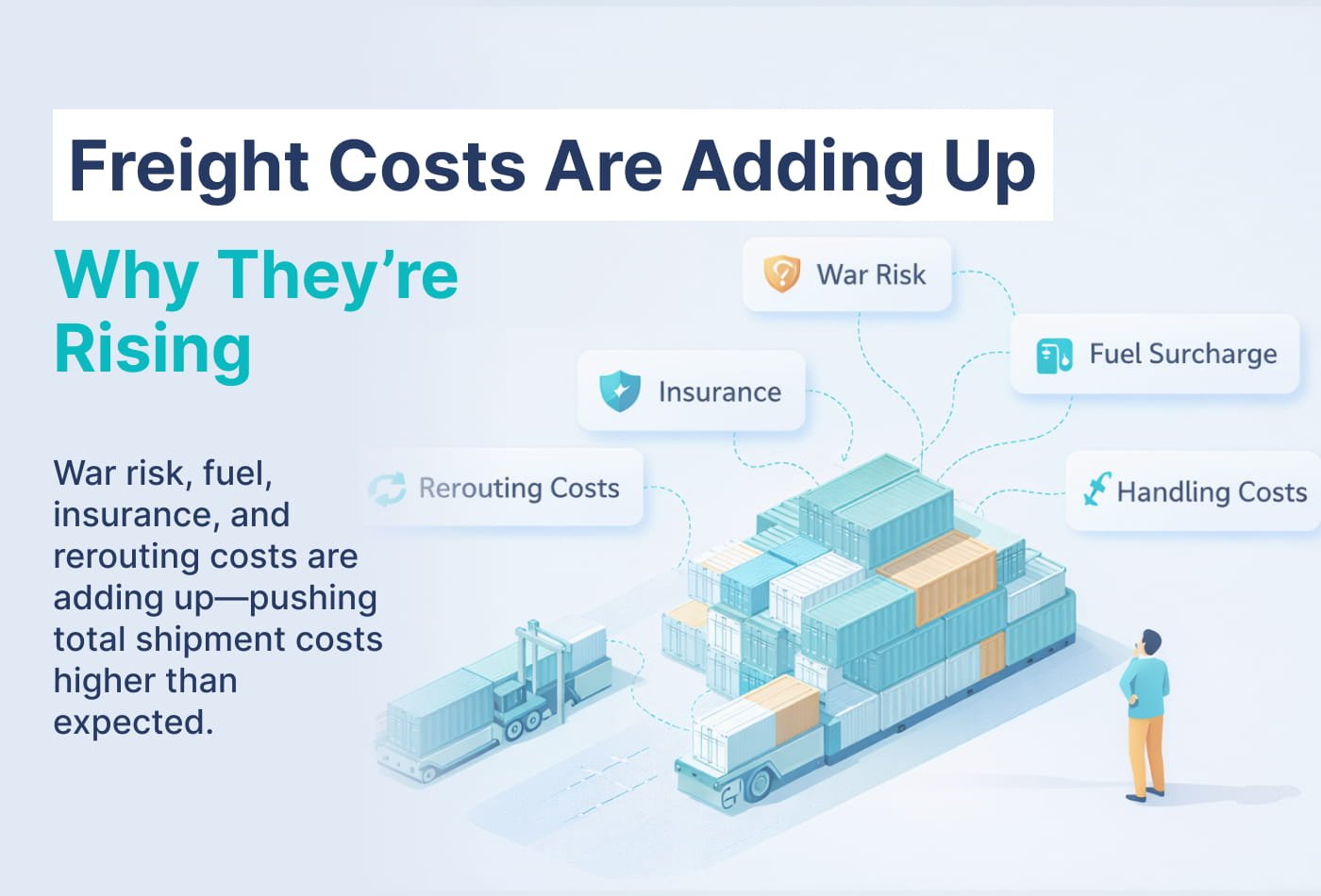
The cost increase is not driven by a single factor, but by multiple layers adding up simultaneously.
What’s driving the cost surge:
- War risk surcharges being added to ocean freight
- Increased fuel costs due to rising oil prices
- Higher marine insurance premiums for high-risk zones
- Additional inland and handling charges due to rerouting
For exporters, this reduces margins and pricing flexibility.
For importers, it increases the overall cost of procurement and inventory.
Shipment Delays Are Disrupting Planning & Commitments
Transit time reliability has taken a major hit. With vessels being rerouted and ports facing congestion, shipments are no longer moving as per standard schedules. This unpredictability is creating challenges across planning and execution.
Even air freight, which is typically used as a faster alternative, is facing delays due to restricted airspace and capacity constraints.
Where delays are happening:
- Longer transit routes adding 10–20 extra days
- Congestion at alternative ports and transshipment hubs
- Delays in vessel berthing and cargo handling
- Air cargo rerouting increasing transit time
Businesses are finding it difficult to commit to delivery timelines.
Production cycles and inventory planning are getting disrupted.
Capacity Constraints Are Limiting Booking Flexibility
Another major challenge is the availability of space across shipping modes. As disruptions increase, carriers are reducing or adjusting services, leading to tighter capacity in the market.
This creates a situation where even if shippers are ready to pay higher rates, securing space itself becomes difficult.
Current capacity challenges include:
- Blank sailings and reduced frequency on key routes
- Limited container and vessel availability
- Backlogs due to delayed shipments
- Reduced air cargo capacity in affected regions
Importers and exporters are facing difficulty in planning shipments.
Last-minute bookings are becoming expensive and unreliable.
Working Capital Pressure Is Increasing
Beyond operations, the financial impact of this disruption is equally significant. Longer transit times and higher freight costs are directly affecting cash flow and working capital cycles.
Goods that are in transit for extended periods lock up capital, while rising logistics costs reduce overall profitability.
Financial challenges businesses are facing:
- Capital blocked in delayed shipments
- Increased cost of logistics reducing profit margins
- Delayed revenue realization due to shipment delays
- Higher dependency on short-term financing
This is especially critical for SMEs and fast-growing exporters.
Lack of Visibility Is Increasing Business Risk
In volatile situations like this, access to real-time information becomes critical. However, traditional logistics processes often fail to provide timely updates, making it difficult for businesses to respond effectively.
Without clear visibility, decision-making slows down, and risks increase.
Key visibility challenges:
- Limited real-time tracking of shipments
- Delayed updates from carriers and partners
- Difficulty in comparing alternate routes or options
- Lack of centralized information for decision-making
Businesses are operating reactively instead of proactively.
What Importers & Exporters Should Do Now
In such an uncertain environment, businesses need to shift from reactive to proactive logistics planning. Taking early action can help reduce the impact of delays and cost increases.
A structured approach to planning and execution is critical to maintaining supply chain stability.
Recommended actions:
- Plan shipments in advance with buffer time
- Diversify routes and avoid dependency on a single lane
- Lock freight rates early to manage cost volatility
- Maintain safety stock for critical goods
- Communicate proactively with suppliers and customers
- Monitor market developments closely
The focus should be on reducing risk and improving flexibility.
How FreightMango Helps You Stay in Control
In a fast-changing logistics environment, having the right tools can make a significant difference. FreightMango enables importers and exporters to make faster, more informed decisions by bringing multiple logistics capabilities onto a single platform.
Instead of relying on fragmented communication and limited options, businesses can gain better control over their shipments and costs.
With FreightMango, you can:
- Compare real-time freight rates across LCL, FCL, Air & Trucking
- Access multiple carriers and route options instantly
- Book shipments quickly without delays
- Track cargo with improved visibility
- Optimize procurement and avoid overpaying
This helps businesses move from uncertainty to data-driven decision-making.
Final Takeaway
The Middle East crisis is a reminder of how quickly global supply chains can be disrupted. For importers and exporters, the impact is immediate — affecting costs, timelines, and overall business performance.
While the situation remains uncertain, the ability to adapt quickly will define how well businesses navigate this phase. Those who focus on visibility, flexibility, and proactive planning will be better positioned to manage disruption and stay competitive in a volatile market.
Share Your Thoughts
Post


 Continue with Google



 Get instant quote
and compare offers in real time
Get instant quote
and compare offers in real time