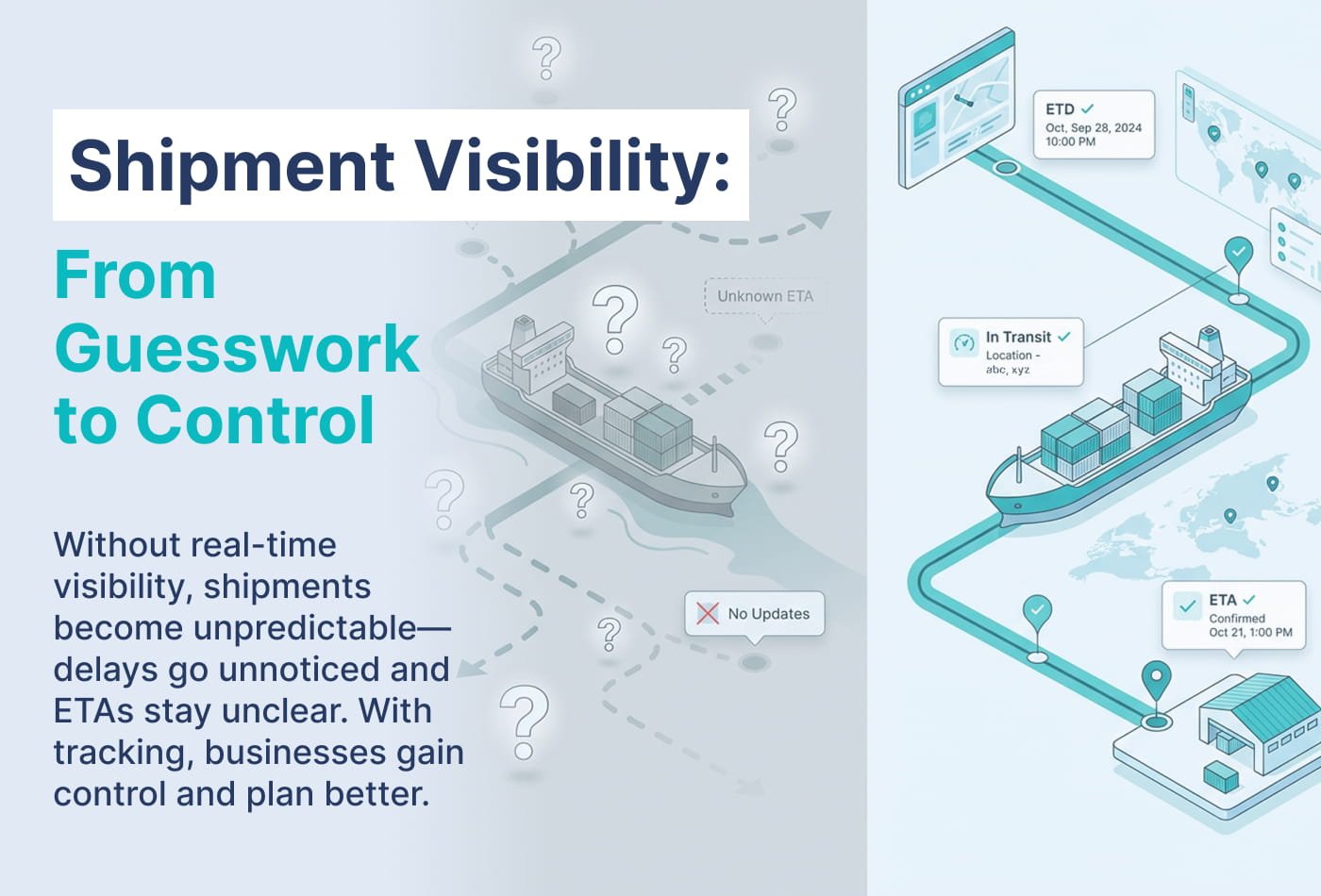
In today’s fast-moving global trade environment, shipment visibility is no longer optional—it’s a necessity. Importers and exporters are under constant pressure to manage tight delivery timelines, rising freight costs, and unexpected disruptions such as port congestion or geopolitical events. Without real-time insight into cargo movement, businesses are left reacting to problems instead of preventing them.
Shipment visibility enables stakeholders to track cargo at every stage—from origin to destination—ensuring better planning, coordination, and decision-making. Whether it’s a delayed vessel or a missed transshipment, having access to timely updates can make the difference between a smooth operation and costly delays.
Problems With Poor Shipment Visibility
Lack of shipment visibility can create multiple operational and financial challenges:
- Unpredictable Delays: Without tracking, businesses are unaware of disruptions until it’s too late.
- Inventory Mismanagement: Poor visibility leads to overstocking or stockouts, affecting working capital.
- Communication Gaps: Teams rely on manual updates from multiple stakeholders, increasing chances of error.
- Customer Dissatisfaction: End customers expect accurate delivery timelines, which become difficult to commit without tracking data.
- Higher Costs: Demurrage, detention, and expedited shipping costs often arise due to lack of proactive planning.
In a volatile logistics environment, these inefficiencies can significantly impact profitability and customer trust.
Role of Container Tracking in Logistics
Container tracking plays a central role in improving shipment visibility. It allows businesses to monitor the real-time status and location of containers across shipping lines, ports, and transit points.
Modern tracking solutions integrate data from carriers, AIS (Automatic Identification Systems), and port terminals to provide accurate updates. This visibility helps logistics teams:
- Identify delays early and take corrective action
- Optimize route planning and reduce transit times
- Coordinate better with freight forwarders and customs agents
- Maintain accurate documentation and compliance
With digital tools replacing manual follow-ups, container tracking ensures that businesses stay informed without constant back-and-forth communication.
Benefits for Importers and Exporters
Shipment tracking solutions offer several tangible benefits for both importers and exporters:
1. Improved Planning & Forecasting
Real-time data helps businesses plan inventory, warehouse space, and production schedules more efficiently.
2. Cost Optimization
By identifying delays early, companies can avoid additional charges such as demurrage and detention.
3. Better Customer Experience
Accurate shipment updates enable businesses to provide reliable ETAs to customers, improving trust and satisfaction.
4. Enhanced Risk Management
Visibility into shipments allows businesses to anticipate disruptions and implement contingency plans proactively.
5. Increased Operational Efficiency
Automation reduces manual tracking efforts, freeing up time for strategic decision-making.
Using CMA CGM Tracking for Supply Chain Monitoring
One of the most widely used carrier tracking systems is CMA CGM. Businesses shipping through this line can leverage CMA CGM tracking to gain real-time insights into their cargo movement.
With CMA CGM tracking, users can:
- Track containers using booking number, container number, or bill of lading
- Access vessel schedules and transit milestones
- Monitor delays, transshipments, and estimated arrival times
- Stay updated with automated notifications
Integrating such tracking tools into your logistics workflow ensures end-to-end visibility, enabling better coordination across supply chain stakeholders.
For businesses managing multiple shipments across carriers, platforms that consolidate tracking data into a single dashboard offer even greater efficiency and control.
Final Thoughts
In an era where supply chains are becoming increasingly complex, shipment visibility is a key driver of efficiency and resilience. Container tracking tools empower businesses with real-time insights, helping them stay ahead of disruptions and optimize operations.
For importers and exporters, investing in reliable tracking solutions is not just about monitoring shipments—it’s about gaining control, reducing risks, and delivering a superior customer experience.
Share Your Thoughts
Post


 Continue with Google



 Get instant quote
and compare offers in real time
Get instant quote
and compare offers in real time