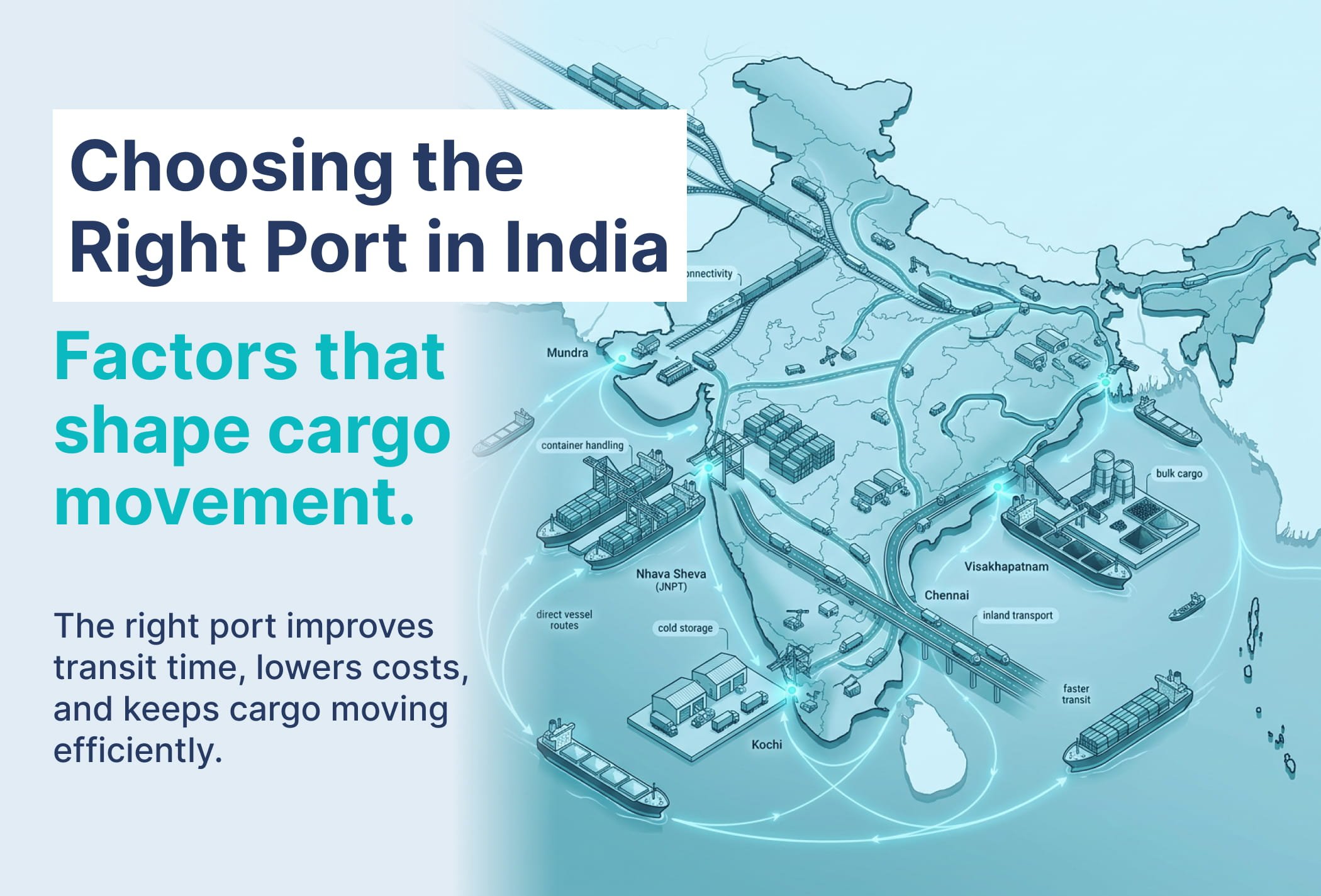
Choosing the right port is an important part of import-export planning. The port you select affects shipping cost, cargo movement, customs clearance, and delivery timelines. India has several ports across its coastline, including some of the biggest ports in India, but every port offers different advantages depending on the type of cargo and business requirements.
A well-connected and efficient port can help businesses reduce delays, lower logistics costs, and improve supply chain reliability. On the other hand, choosing the wrong port may lead to congestion, higher transportation expenses, and operational inefficiencies.
Factors That Affect Port Selection
Several factors influence how businesses select ports for cargo movement in India. Companies usually compare operational efficiency, connectivity, and cost before making a decision.
Geographic Location
The distance between the manufacturing unit, warehouse, and port plays a major role in logistics planning. A nearby port can reduce inland transportation expenses and improve cargo delivery speed.
Key advantages of selecting a nearby port include:
- Lower trucking and rail transportation cost
- Reduced transit time
- Better coordination with logistics partners
Cargo Type
Different ports specialize in handling different types of cargo. For example, container ports are ideal for general import-export shipments, while bulk ports are designed for commodities such as coal, iron ore, and petroleum products.
Businesses should ensure the port has:
- Proper cargo handling equipment
- Adequate storage facilities
- Industry-specific infrastructure
Port Infrastructure
Modern ports with advanced infrastructure usually provide faster cargo handling and reduced delays. Infrastructure quality directly impacts operational efficiency.
Important infrastructure features include:
- Container terminals
- Warehousing facilities
- Automated cargo handling systems
- Container freight stations
- Cold storage facilities
Connectivity and Transportation
Efficient inland connectivity is equally important. Ports connected to highways, rail networks, and freight corridors offer smoother cargo movement across the country.
Poor connectivity can increase:
- Delivery delays
- Fuel costs
- Overall transportation expenses
Cost Factors in Port Selection
Many businesses focus only on freight rates while selecting ports, but total logistics cost involves several additional factors.
Inland Transportation Cost
Transporting cargo from the factory to the port can significantly affect the overall shipping budget. Sometimes, a port with slightly higher ocean freight may still be more economical due to lower inland transportation expenses.
Port Charges
Every port has its own tariff structure. Charges may include:
- Cargo handling fees
- Terminal usage charges
- Documentation fees
- Storage charges
Understanding these costs in advance helps businesses avoid unexpected expenses.
Demurrage and Detention
Congestion and clearance delays can lead to demurrage and detention penalties. Businesses often prefer ports known for faster cargo processing to avoid these additional costs.
Supply Chain Reliability
A cheaper port is not always the best option if shipment delays are frequent. Reliable operations often help businesses save money in the long run through better inventory management and faster delivery.
Transit Time and Congestion
Transit time is a major concern for industries dealing with time-sensitive cargo such as retail products, electronics, and perishable goods.
Vessel Turnaround Time
Ports with efficient loading and unloading systems can process ships faster, improving schedule reliability.
Benefits of faster turnaround include:
- Reduced shipment delays
- Better vessel scheduling
- Improved supply chain planning
Port Congestion
Highly congested ports can slow down cargo movement and increase operational costs. Congestion may result from:
- High cargo volume
- Limited infrastructure
- Delays in customs clearance
Businesses often monitor congestion levels before finalizing shipping routes.
Direct Shipping Services
Ports with direct international vessel services usually offer shorter transit times compared to feeder ports that depend on transshipment hubs.
Direct connectivity helps:
- Reduce cargo handling
- Minimize delays
- Improve shipment visibility
Digital Tracking Systems
Many modern ports now provide digital cargo tracking and automated scheduling systems. These technologies help businesses monitor shipments in real time and improve planning accuracy.
Example: Choosing Ports for Different Industries
Every industry has unique logistics requirements, which means port selection varies depending on cargo type and operational priorities.
Textile and Apparel Industry
Textile exporters generally prefer ports with:
- Fast customs clearance
- Strong container connectivity
- Frequent vessel schedules
This helps businesses meet strict international retail timelines.
Automotive Industry
Automobile exporters require ports equipped with:
- Roll-on/roll-off terminals
- Specialized vehicle handling facilities
- Large storage yards
Agriculture and Food Products
Agricultural exporters prioritize ports offering:
- Cold storage infrastructure
- Efficient inspection systems
- Faster cargo handling
This reduces spoilage risk for perishable goods.
Oil and Chemical Industry
Liquid cargo industries require specialized terminals with:
- Pipeline infrastructure
- Storage tanks
- High safety standards
Heavy Manufacturing
Industrial equipment and machinery exporters often choose deep draft ports with heavy cargo handling capabilities.
Learn About India’s Biggest Ports
India’s largest ports play a vital role in international trade and logistics. These ports handle container cargo, bulk commodities, petroleum products, automobiles, and industrial shipments on a massive scale.
Each major port has its own strengths in terms of infrastructure, cargo specialization, and shipping connectivity. Understanding these differences can help businesses make smarter logistics decisions.
Selecting the right port is not just about shipping cargo—it is about improving efficiency, reducing costs, and building a stronger supply chain for long-term business growth.
Share Your Thoughts
Post


 Continue with Google



 Get instant quote
and compare offers in real time
Get instant quote
and compare offers in real time