In logistics and shipping, the term “in transit” is one of the most frequently seen shipment statuses. Yet, for many shippers and customers, it often leads to uncertainty about where the cargo actually is and when it will arrive.
So, what does in transit mean in logistics, and how should businesses interpret this status while tracking shipments? This guide explains the meaning of in transit across delivery, shipping, and freight movement, with practical insights for importers, exporters, and logistics teams.
What Does In Transit Mean in Logistics?
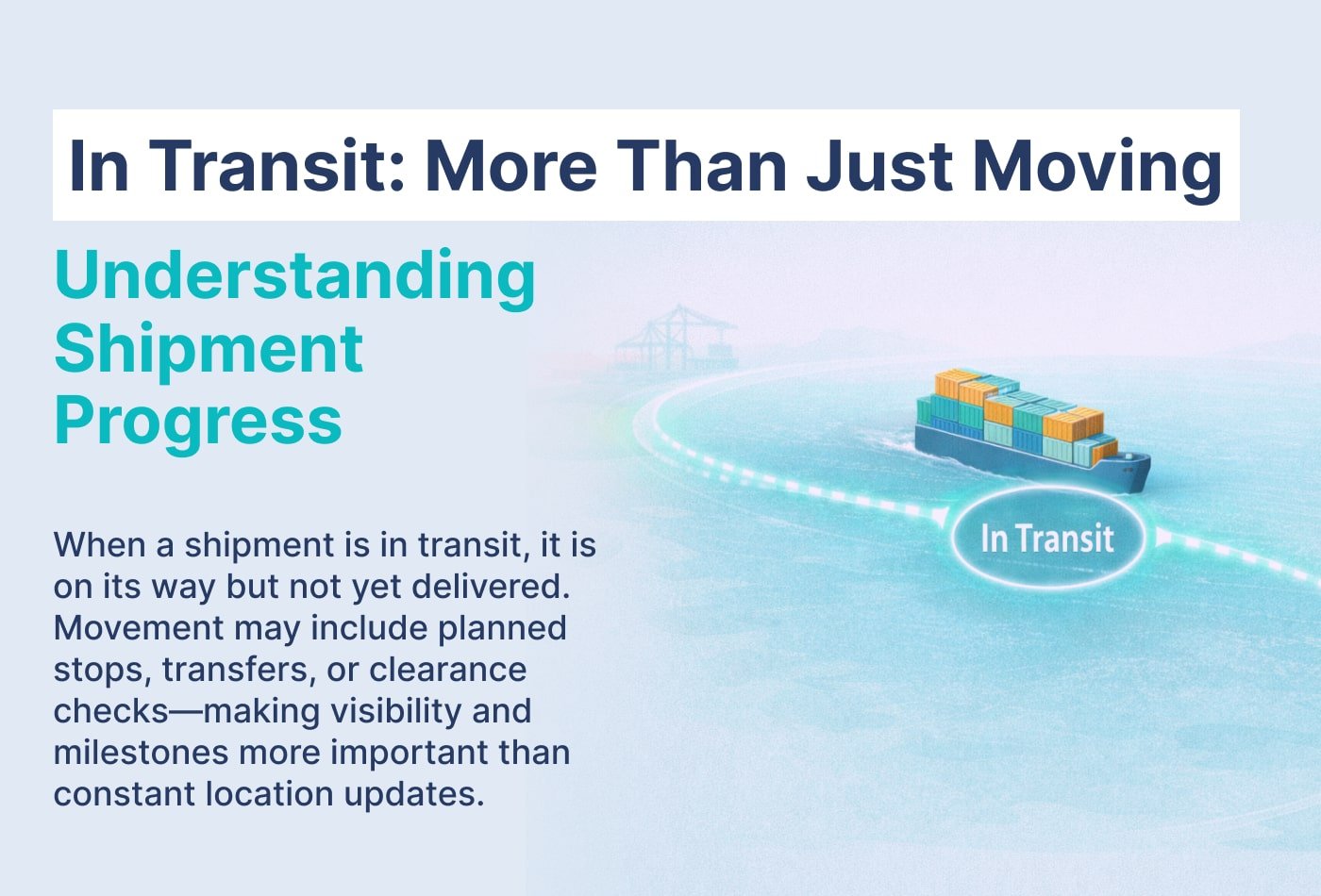
In transit means that a shipment has departed from its origin location and is currently moving through the logistics network toward its destination. The cargo is no longer at the shipper’s facility but has not yet reached the consignee.
From a logistics perspective, in transit may include:
- Movement between warehouses, ports, or terminals
- Transportation via road, rail, air, or sea
- Planned halts at transshipment hubs
- Clearance-related processes while the shipment is en route
This is why shipments may appear in transit even when there are no frequent location updates
In Transit Meaning in Delivery: How It Works
When it comes to courier and last-mile services, in transit meaning in delivery is relatively simple. It indicates that:
- The parcel has been picked up
- It is traveling between sorting facilities
- It has not yet reached the final delivery agent
In domestic courier networks, this phase is usually short. For long-distance or cross-border deliveries, parcels may remain in transit longer due to multiple handovers.
What Does Shipment In Transit Mean for Freight Shipments?
For importers and exporters, what does shipment in transit mean depends heavily on the freight mode:
- Ocean freight: The container is loaded on a vessel or moving between ports
- Air freight: The cargo has departed the origin airport or is passing through transit hubs
- Road freight: The truck has left the pickup point and is traveling toward the destination
In freight logistics, in transit does not always mean continuous movement. Containers may pause at ports, ICDs, or CFS locations as part of planned routing.
Platforms like FreightMango help bring clarity to this stage by consolidating tracking updates from multiple carriers, so users can see shipment progress across different milestones in one place.
What Does In Transit Mean in Shipping Operations?
In shipping operations, in transit covers the full journey between origin and destination, including scheduled stops and documentation checks.
Understanding what does in transit mean shipping is important because:
- The cargo may still be undergoing customs clearance
- The vessel or flight may not move daily
- ETA updates may change due to operational factors
Modern logistics platforms focus on providing milestone-based tracking rather than just a single “in transit” status.
Ship In Transit Meaning Compared to Other Statuses
To better understand ship in transit meaning, here’s how it differs from similar logistics statuses:
- Dispatched: Shipment has left the shipper but may still be at origin hub
- In transit: Shipment is moving through the logistics network
- Arrived at destination port/city: Cargo has reached the destination location
- Out for delivery: Final delivery process has started
- Delivered: Shipment has reached the consignee
In transit is the broadest and longest phase in the shipment lifecycle.
What Does It Mean If a Parcel Is In Transit for a Long Time?
A common concern is seeing the same status for several days. So, what does it mean if a parcel is in transit without updates?
This can happen due to:
- International or long-haul routes
- Sea freight movements with limited scan points
- Customs checks while en route
- Transit through ports or hubs with milestone-based updates
With shipment visibility tools like FreightMango’s tracking interface, users can monitor container movement, vessel milestones, and ETA changes across multiple liners, reducing uncertainty during extended in-transit periods.
Shipment En Route Means What?
The phrase shipment en route means the cargo is actively traveling toward its next checkpoint or final destination. While often used interchangeably with in transit, en route usually implies confirmed movement rather than waiting at a transit point.
Why In-Transit Visibility Matters for Businesses
Accurate in-transit visibility helps businesses:
- Plan inventory and warehouse operations
- Coordinate customs and documentation
- Communicate realistic timelines to customers
- Reduce follow-ups and manual tracking
Digital freight platforms like FreightMango enhance this visibility by aggregating tracking data, vessel schedules, and ETA updates across carriers and shipment types.
Common Misunderstandings About In Transit Status
- In transit does not mean delayed
- In transit does not always mean continuous movement
- In transit updates may not appear daily
Clear tracking tools and contextual shipment data help eliminate these misconceptions.
FAQs: In Transit Meaning in Logistics
What does in transit mean in logistics?
It means the shipment has left the origin and is moving through the logistics network toward its destination.
What does in transit mean in delivery?
It indicates the parcel is traveling between facilities and has not yet reached the delivery stage.
What does shipment in transit mean for ocean freight?
It means the container is sailing or moving between ports and may still undergo customs or transshipment.
What does it mean if a parcel is in transit for several days?
This usually reflects long-distance movement, sea freight transit, customs checks, or limited scan points.
Is in transit the same as out for delivery?
No. In transit refers to the journey phase, while out for delivery is the final-mile stage.
Shipment en route means delivered?
No. En route means the shipment is on its way, not yet delivered.
Final Thoughts
Understanding what does in transit mean in logistics helps shippers, importers, and exporters track shipments with greater confidence. Whether it’s a courier parcel or a containerized freight movement, in transit simply reflects the journey between origin and destination—often involving multiple checkpoints and processes.
With digital visibility solutions like FreightMango, businesses can track shipments more transparently, monitor ETAs, and stay informed throughout the in-transit phase.
Share Your Thoughts
Post


 Continue with Google



 Get instant quote
and compare offers in real time
Get instant quote
and compare offers in real time