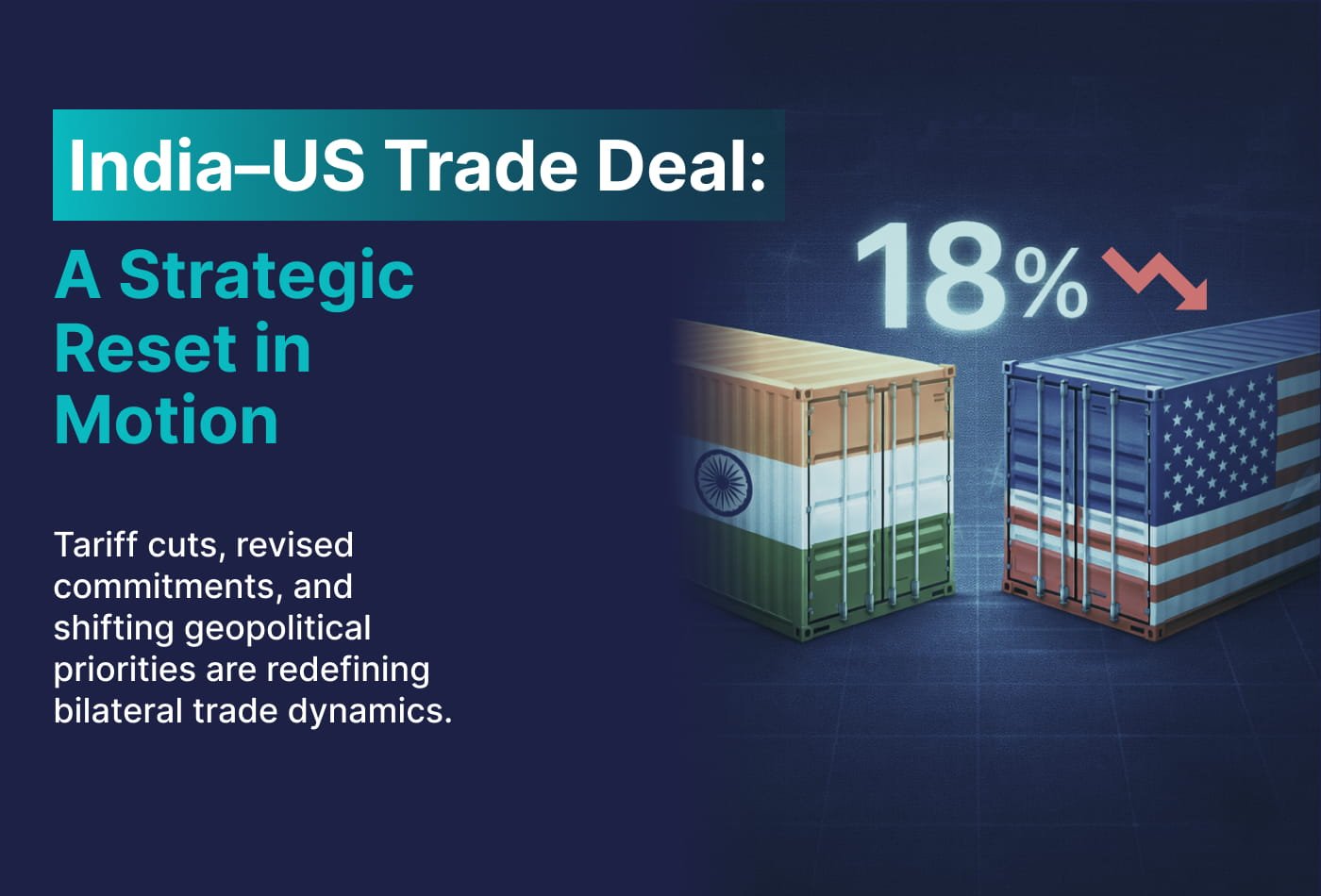
In early 2026, India and the United States announced a landmark interim trade agreement aimed at resetting a contentious trade relationship, easing punitive tariffs, and expanding bilateral commerce. However, since the initial announcement, major changes to the deal’s terms and fact sheets have emerged within days, signaling shifting priorities, pushback, and diplomatic recalibration.
1. The Initial Announcement: Tariff Reset and Optimism
- The deal was initially declared historic by U.S. President Donald Trump, highlighting flows of investment and trade expansion, and touted as unlocking new opportunities for sectors like textiles, machinery, and energy.
- Under the early framework outline, the U.S. agreed to cut tariffs on Indian goods from around 50% to 18%, a dramatic reduction designed to ease entrenched trade barriers and unlock competitiveness for Indian exports.
- This was seen as restoring predictability for exporters in textiles, leather, home decor, pharmaceuticals, and other key categories that suffered from punitive tariff increases in 2025.
2. White House Revises the Deal Terms — Within Days
Almost immediately after the fact sheet was publicized, the White House quietly revised key parts of the trade deal document — a rare occurrence that reflects negotiation dynamics and pressure from both sides:
a) ‘Pulses’ Removed from Product List
Originally, pulses — including lentils and other staples important to Indian agriculture — were listed as U.S. products India would reduce tariffs on. But this reference was removed in the updated factsheet, protecting a politically sensitive sector for India’s farmers and consumers.
The deletion suggests New Delhi successfully resisted language seen as risking domestic agricultural markets.
b) $500 Billion Purchase Target Language Softened
- Early versions said India committed to buying more than USD 500 billion of U.S. goods over five years. But the revised document now states India “intends” to do so — a nuanced but important change that shifts this from a binding obligation to a stated intention.
- This distinction underscores concerns around feasibility and public pushback on large procurement commitments.
c) Digital Services Taxes Language Removed
Mention of India rolling back digital services taxes (a contentious issue in broader U.S. trade circles) was dropped. Instead, the deal now commits both sides to negotiate bilateral digital trade rules without affirming any specific tax elimination.
3. Geopolitics and Strategic Shifts
Although not officially confirmed in formal fact sheets yet, some commentary — including from analysts and unofficial compilations — suggests the interim deal discussions include:
- India agreed to reduce or stop direct and indirect purchases of Russian oil, part of a broader strategic repositioning in energy supply chains. This aspect has been cited in media reporting even if it’s not fully clear in written fact sheets.
- A joint push toward technology cooperation, including high-tech equipment, data center components, and industrial goods.
Such elements reflect the strategic goals of both sides — diversification from China-centric supply chains for the U.S. and enhanced market access for India.
4. Market and Economic Reactions
Stock and Business Sentiment
Major sectors expected to benefit — textiles, auto ancillary, chemicals, and engineered goods — have seen improved investor sentiment following the tariff reset, contributing to rallying Indian export-oriented equities.
Trade Balance Concerns
Economists are skeptical over the practicality of the ambitious $500 billion procurement target. The proposed scale far exceeds recent U.S. export figures to India (~$41 billion), raising questions about distortive procurement policies and distortions in market decisions.
5. Domestic Pushback and Political Sensitivities
The trade deal has not been universally welcomed in India:
- Farmer organizations in Punjab protested the deal, arguing it may harm local producers and articulate concerns about agricultural imports undermining rural livelihoods.
- This underscores that even as diplomats and commerce officials negotiate, domestic economic interests — especially in agriculture — remain powerful stakeholders.
What All This Means for Businesses and Exporters
Export Competitiveness Improves
With U.S. tariffs on many Indian goods trending toward 18%, exporters regain cost advantages and can more competitively price into the U.S. market.
Implementation Clarity Still Evolving
Freight, customs, and supply chain planning still await detailed schedules of tariff application and the full legal text. Exporters should monitor official notifications closely.
Sensitive Sectors Shielded
Agriculture protections — especially for pulses — suggest export gains will concentrate in industrial and MSME sectors rather than broad agricultural markets.
Strategic Trade Dynamics Are Shifting
Digital trade standards, energy procurement patterns, and supply-chain diversification reflect a deeper realignment beyond mere tariff cuts.
Conclusion
The India–US trade deal of 2026 is far from static — it is evolving rapidly, with major fact-sheet revisions within days of release, political pushback, and strategic recalibrations by both governments.
While tariff reductions create a positive outlook for exports, the softer language on purchase commitments, omission of certain sensitive products like pulses, and ongoing negotiation signals indicate a cautious, negotiable framework rather than a final, iron-clad treaty.
For exporters, policymakers, and logistics planners, this means staying agile, watching policy texts closely, and aligning supply chains to benefit from tariff and market access shifts while guarding against volatility and sector-specific sensitivities.
Share Your Thoughts
Post


 Continue with Google



 Get instant quote
and compare offers in real time
Get instant quote
and compare offers in real time