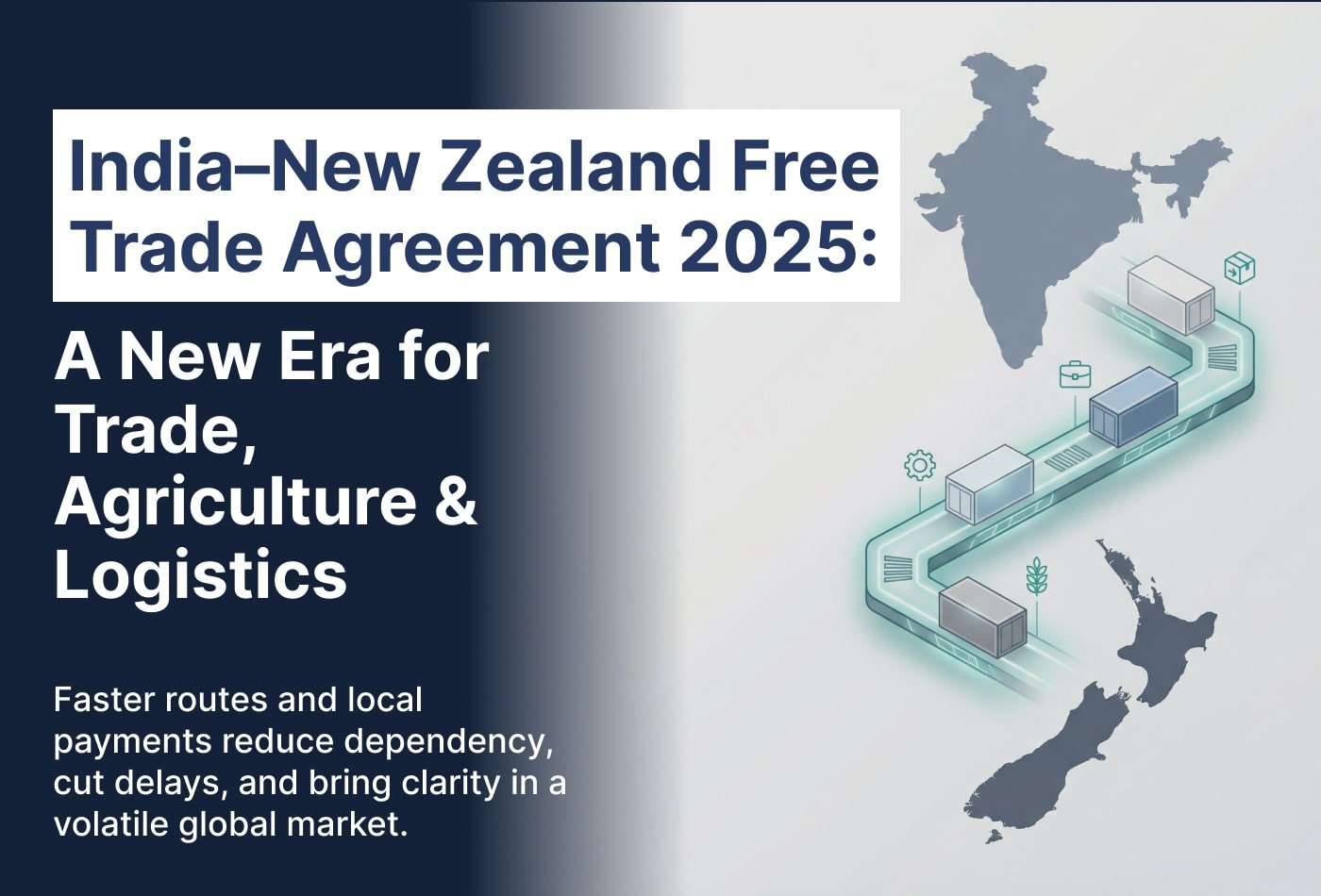
In a significant boost to global trade relations, India and New Zealand have concluded a landmark Free Trade Agreement (FTA) in December 2025, marking one of the fastest negotiated trade pacts in recent years. The agreement, finalised just nine months after negotiations began, promises to reshape bilateral economic engagement, unlock export opportunities across key sectors, and drive dynamic growth in logistics and supply chains.
Prime Minister Narendra Modi and New Zealand Prime Minister Christopher Luxon jointly announced the successful conclusion of the FTA following high-level discussions, underscoring the strategic importance both countries place on deepening economic ties.
What This FTA Covers
The India–New Zealand FTA is designed to expand market access, reduce tariffs, and promote bilateral trade across diverse product categories. Key elements of the agreement include:
Zero Duty Access for Indian Exports
One of the most impactful outcomes of the agreement is the zero-duty market access extended to Indian exports across 1,379 tariff lines, accounting for nearly 17% of all product tariff lines under New Zealand’s tariff schedule.
This tariff liberalisation is expected to substantially enhance the price competitiveness of Indian products in the New Zealand market.
Agriculture & Processed Food: A Major Win for Indian Exports
The India–New Zealand FTA has strong emphasis on agriculture and processed food sectors, unlocking significant opportunities for exporters and farmers alike:
Key Export Categories That Benefit
Fresh fruits, vegetables and horticultural produce
Zero duty access will help Indian producers compete more effectively, especially in seasonal and niche segments.
Coffee, cocoa and spices
India’s established global reputation as a spice and coffee origin stands to gain from enhanced market access and tariff-free entry.
Cereals
Grain exporters, especially those focusing on niche or specialty crop markets, will benefit from tariff dismantling.
Ready-to-eat and processed food products
With growing consumer demand in New Zealand, processed and convenience food exports from India can now tap into new market potential with lower landed costs.
By opening these categories, the agreement is expected to drive larger export volumes, better pricing for producers, and additional income for farmers, particularly in rural and agro-processing communities.
Boosting Bilateral Trade
With tariff barriers reduced across key sectors, analysts estimate a significant uptick in bilateral trade flows, with the potential for trade volumes to double in the next few years. Enhanced export competitiveness and better market access will incentivise businesses to explore new trade corridors.
Logistics & Supply Chain Impact
The FTA is not just about trade — it also carries strong implications for logistics, freight, and supply-chain stakeholders:
Increased Ocean & Air Freight Demand
As export volumes grow — especially in agriculture and processed foods — there will be an increased reliance on temperature-controlled ocean containers and air cargo capacity. Perishable products like fruits, vegetables, and processed foods often require:
- Refrigerated (Reefer) containers for ocean freight
- Temperature-controlled handling at airports
- Reliable visibility from origin to destination
Logistics providers and freight forwarders will need to recalibrate planning strategies to support these nuanced demands.
Supply-Chain Infrastructure Investments
To sustain growth, both countries will benefit from continued investments in logistics infrastructure:
- Cold chain facilities at ports and airports
- Improved hinterland connectivity
- Enhanced warehouse and distribution networks
These investments will help maintain service quality, reduce freight dwell times, and lower overall logistics costs.
Beyond Tariffs: Services, Mobility & Investment
The India–New Zealand FTA goes beyond trade in goods. It also includes provisions to support:
- Services trade — particularly in sectors such as education, IT, and professional services
- Mobility of professionals and skilled workers — helping facilitate business and talent exchange
- Strengthened institutional cooperation for trade facilitation and regulatory alignment
These elements are designed to support a broader and deeper economic partnership that extends beyond simple tariff cuts.
What’s Next?
The agreement is expected to be formally signed and ratified in 2026, after which implementation will begin. Businesses engaged in bilateral trade are advised to start planning:
- Tariff benefit utilisation strategies
- Distribution and logistics alignment
- Market entry plans for new product categories
- Cold chain and pre-shipment coordination
Final Thoughts
The India–New Zealand Free Trade Agreement concluded in December 2025 marks a milestone in bilateral economic cooperation. With significant tariff reductions, especially in agriculture and processed foods, the agreement not only opens doors for exporters and farmers but also signals stronger integration of global value chains.
As export flows grow and logistics demand evolves, efficient freight planning, technology adoption, and supply-chain visibility will play an increasingly important role in translating these trade opportunities into real business outcomes.
Share Your Thoughts
Post


 Continue with Google



 Get instant quote
and compare offers in real time
Get instant quote
and compare offers in real time