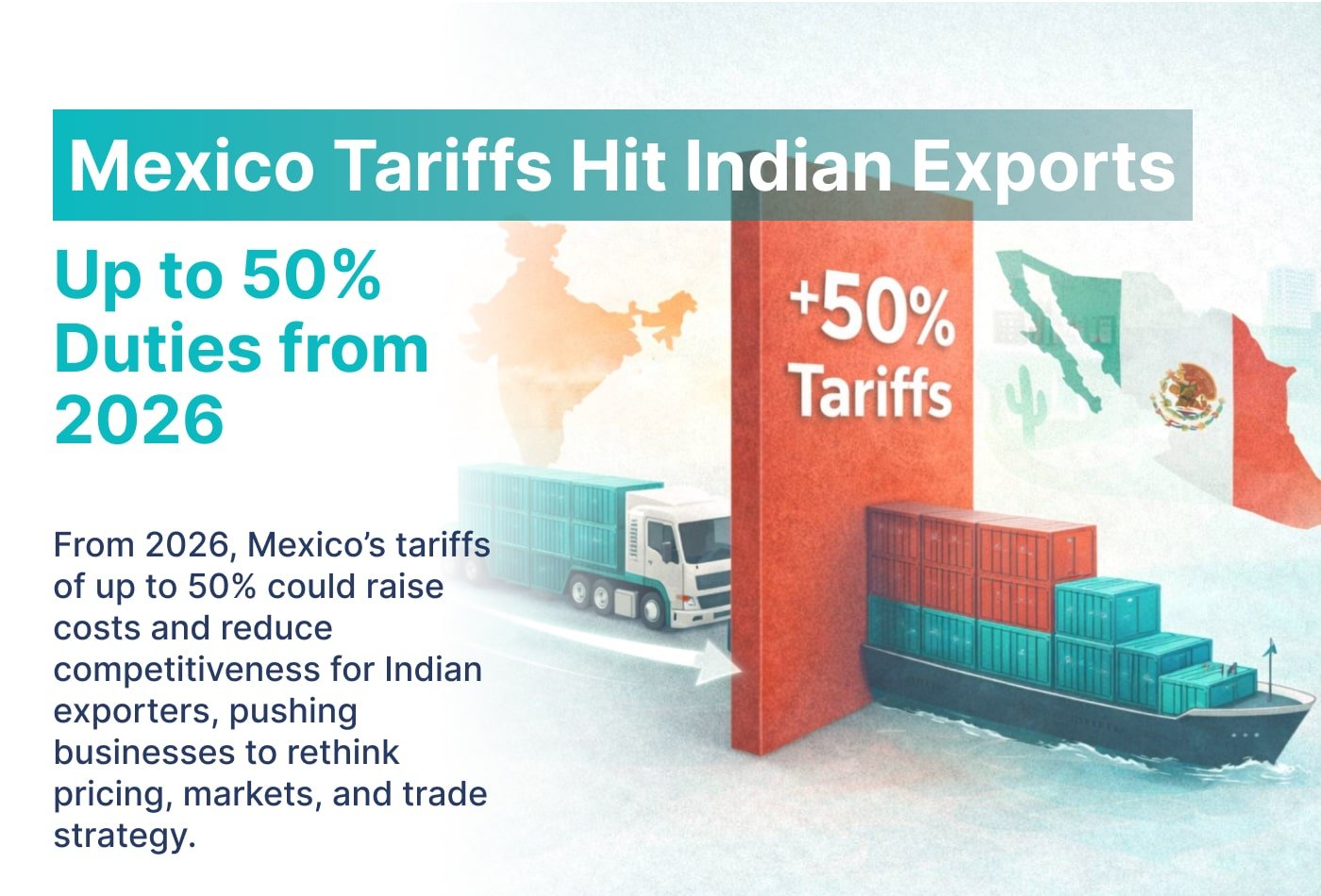
Mexico has approved a major tariff overhaul that will have significant implications for exporters from India and other Asian economies starting January 1, 2026. This move, passed by the Mexican Senate and Congress, introduces import duties ranging from 5% to as high as 50% on a wide range of products from countries that do not have an existing free trade agreement with Mexico, including India, China, South Korea, Thailand, and Indonesia.
Latest Policy Highlights (Effective Jan 1, 2026)
- Tariff hikes up to 50% will affect over 1,400 product categories imported from India and other Asian nations.
- A majority of affected products will see tariffs around 35%, while select categories face the full 50% levy.
- Impacted sectors include automobiles and auto parts, textiles and garments, plastics, steel, electronics, apparel, footwear, furniture, and household goods.
Why the Tariffs Were Introduced
According to Mexican authorities, the tariff hike is part of a broader effort to protect domestic manufacturing and reduce reliance on imports from countries that lack trade agreements with Mexico. The move is also widely seen as aligning Mexico’s trade policy with shifting global trade dynamics and regional pressures from the United States, especially ahead of key USMCA (United States–Mexico–Canada Agreement) reviews.
Immediate Impact on Indian Exports
- Automobile & Auto Components: India’s car and auto parts exports — previously enjoying more favourable access — are expected to face steep cost increases, potentially shrinking demand in the Mexican market.
- Engineering & Industrial Goods: With engineering goods making up a large portion of India’s exports to Mexico, many items could become significantly less competitive due to the tariff surge.
- Consumer Products: Textiles, footwear, household appliances, and leather goods will also be hit, raising landed costs for Mexican buyers.
These new duties come at a time when Indian exporters are already facing elevated tariffs in other markets, adding to global trade challenges.
Government Response & Trade Talks
India has engaged in discussions with Mexican authorities over the tariff increases and is exploring trade policy avenues, including Preferential Trade Agreements (PTA) or deeper trade negotiations, as a way to mitigate tariff impacts and secure concessions for Indian supply chains.
Officials have emphasized that the tariff move is not specifically targeted at India, but rather structured under Mexico’s Most Favoured Nation (MFN) framework for non-FTA partners.
What This Means for Exporters & FreightMango Users
- Higher Duties = Higher Costs: Indian exporters shipping to Mexico should prepare for increased landed costs on many product categories beginning 2026.
- Market Strategy Review: Businesses may need to evaluate alternative markets, pricing strategies, and supply-chain adjustments.
- Trade Negotiation Outlook: If trade talks yield positive results, future tariff relief may become feasible, but exporters should plan well in advance.
Summary:
Mexico’s tariff policy introduction is a major trade development in early 2026 that will significantly influence export dynamics for India and other Asian exporters. Businesses engaged in shipments to Mexico should closely monitor progress in trade talks and adjust logistics, pricing, and market strategies accordingly.
Share Your Thoughts
Post


 Continue with Google



 Get instant quote
and compare offers in real time
Get instant quote
and compare offers in real time