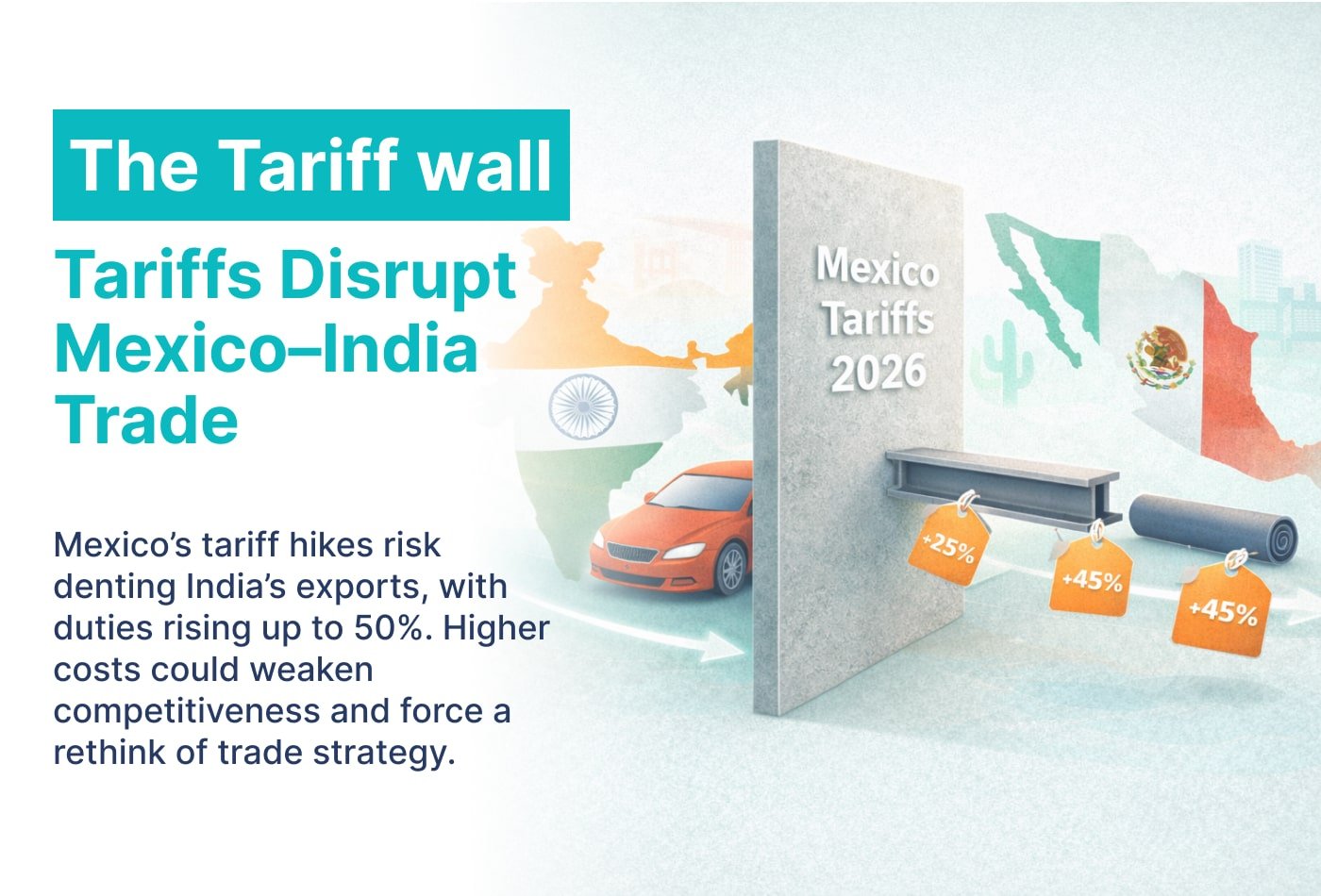
In a major development that is drawing global trade attention, Mexico has taken steps to sharply increase import tariffs on goods from countries without a free trade agreement — including India. This move, set to come into effect from January 1, 2026, is reshaping how New Delhi and businesses in India view their trade strategy toward Latin America, sparking intense diplomatic and commercial discussions between the two governments.
What Exactly Is Happening?
Mexico’s Congress recently approved a sweeping revision of its tariff regime, authorizing duties ranging from 5 % up to as high as 50 % on selected imports from countries that do not enjoy special trade agreements with Mexico — a group that includes India, China, South Korea, Thailand and Indonesia.
These tariff hikes cover a broad spectrum of products such as:
- Automobiles and auto parts
- Textiles and garments
- Plastics and furniture
- Steel and metals
- Electronics and machinery
…and many other goods that India exports regularly to Mexico.
Impact on India’s Exports
This tariff escalation comes at a sensitive time for Indian exporters:
- India exported around $5.7 billion worth of goods to Mexico recently, making it an important emerging market for Indian products.
- Experts estimate that as much as three-quarters of India’s exports to Mexico could be hit by the new duties, meaning higher costs and lower competitiveness of Indian goods relative to those from countries with preferential access.
- The automobile sector stands out: tariffs on passenger cars will jump from about 20 % to 50 %, putting roughly $1 billion in Indian car exports at risk and significantly eroding price competitiveness.
Other key sectors such as electronics, textiles, metals, and machinery also face steep duty increases, challenging long-standing export growth trends.
Why Is Mexico Doing This?
Mexican officials and analysts point to multiple reasons behind the tariff reform:
- Protect Domestic Industry: The primary stated goal is to boost Mexico’s local manufacturing by making foreign imports more expensive. This reflects a broader global trend toward trade protectionism.
- WTO-Compliant Strategy: The changes are technically within Mexico’s World Trade Organization (WTO) binding ceilings, so they are not easily challengeable.
- Geopolitical Pressures: Some analysts see the move as part of Mexico’s alignment with broader U.S. trade policy shifts, particularly under current negotiations within the US-Mexico-Canada trade framework.
India’s Response: Negotiating a Preferential Trade Pact
Facing the looming tariff shock, India has quickly engaged Mexico to negotiate a Preferential Trade Agreement (PTA) — a targeted trade deal that could reduce or eliminate duties on selected products.
Recent statements from officials indicate that technical discussions on the PTA are already underway, with the next key milestone being the finalization of terms of reference possibly within the coming weeks.
Unlike a full Free Trade Agreement (FTA), a PTA is typically faster to negotiate and can give exporters relief sooner — especially critical for sectors like automobiles, machinery and textiles that are feeling immediate pressure from tariff hikes.
What This Means for Businesses and Trade Relations
Short-Term Effects
- Indian exporters may face higher costs and reduced demand in Mexico once tariffs take effect in 2026.
- Price-sensitive buyers in Mexico may shift toward products from free-trade partners.
Medium-Term Outlook
- A successfully negotiated PTA could restore some tariff advantages and keep Indian industry competitive in the Mexican market.
- Trade diversification strategies and market reorientation might become priorities for Indian exporters.
Long-Term Strategic Shifts
- India’s broader export strategy now appears focused on seeking trade partnerships and agreements to shield against rising global protectionism.
- Multilateral institutions and WTO rules are being tested as major economies adjust tariffs in response to geopolitical and domestic pressures.
Conclusion
The Mexico-India tariff story is more than a sudden duty hike — it reflects shifting global trade dynamics, strategic diplomatic engagement and the increasing need for targeted trade agreements. With the new tariff regime set to begin in January 2026, Indian industries and policymakers are on alert, seeking diplomatic solutions that preserve market access and sustain growth.
If you’re an exporter, policymaker or business strategist, watching the PTA negotiations with Mexico will be critical over the next few months. The outcome could influence future trade flows, pricing decisions, and investment choices for Indian enterprises in Latin America and beyond.
Share Your Thoughts
Post


 Continue with Google



 Get instant quote
and compare offers in real time
Get instant quote
and compare offers in real time