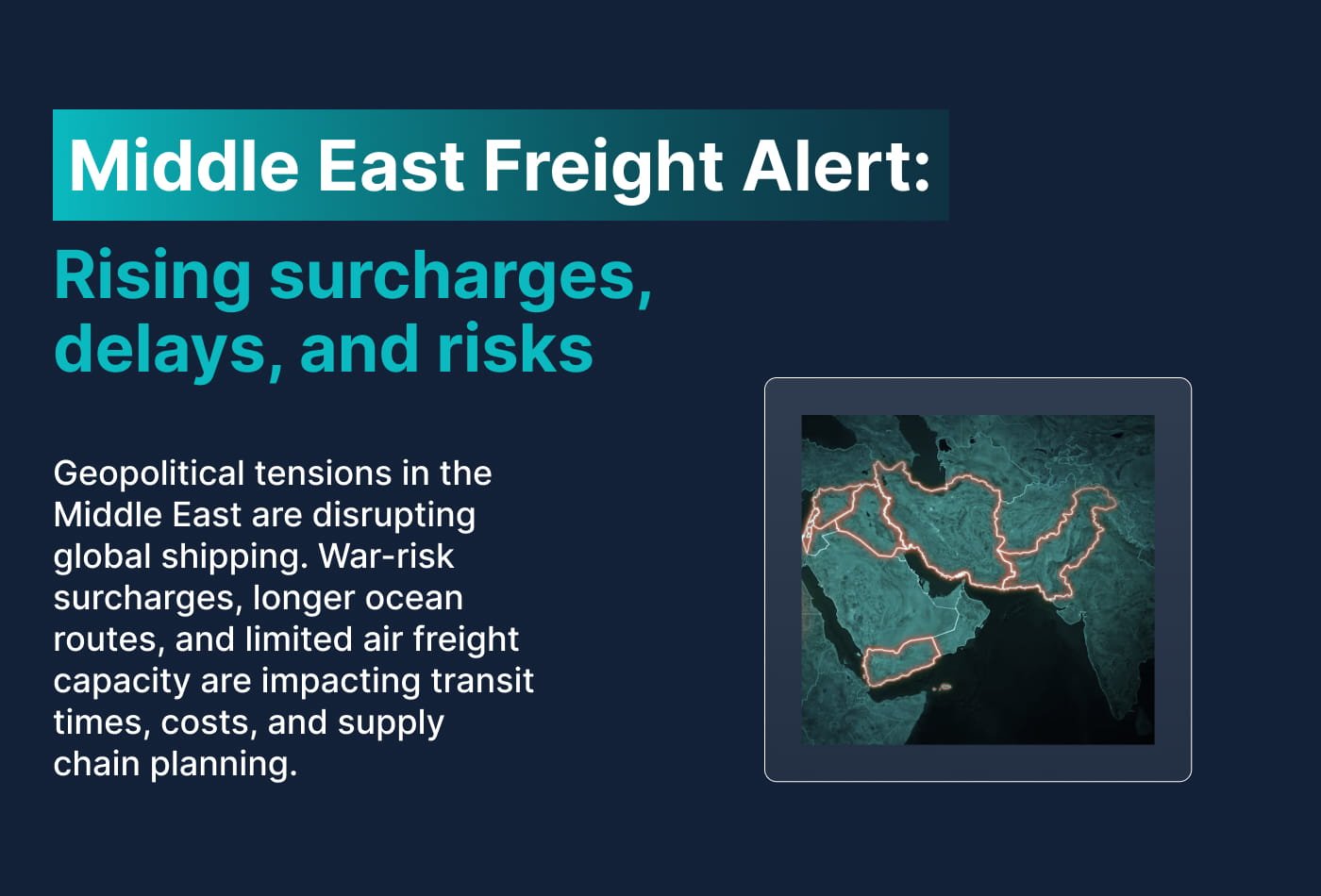
The evolving conflict in the Middle East — particularly around the Strait of Hormuz and Red Sea trade corridors — has escalated into one of the most significant disruptions facing global freight and logistics networks in recent years. What began as regional tensions has now translated into measurable impacts across sea, air, and land freight, affecting transit times, freight rates, insurance premiums, and supply chain planning for businesses worldwide.
Why the Middle East Matters for Global Trade
The Middle East region, especially the Persian Gulf and adjacent waterways, sits at the heart of global maritime trade. Roughly 20% of the world’s oil and LNG shipments pass through the Strait of Hormuz — one of the narrowest and most strategically critical chokepoints for global energy and freight movements. Disruption here triggers ripple effects across air and sea logistics alike.
The Red Sea and Suez Canal — vital gateways between Asia and Europe — have seen renewed security concerns. Carriers are being forced to make tactical decisions about routing, risk exposure, and cargo prioritization.
Key Freight Disruption Trends You Should Know
1. War Risk and Emergency Surcharges
Major carriers are now actively imposing war risk surcharges (WRS) on cargo to and from Middle East regions, including the Upper Gulf, Arabian Gulf, and Persian Gulf. These surcharges range from approximately $1,500–$3,500 per container and apply to both new bookings and cargo already in transit.
At the same time, emergency conflict surcharges are being announced that further increase the cost of shipping through high-risk zones like the Gulf and nearby chokepoints.
2. Reduced Air Freight Capacity and Rerouted Schedules
Air cargo capacity has been strained as airlines reroute flights around closed or high-risk airspace. Some carriers have temporarily suspended flights or altered routes, which has tightened available lift and increased rates.
As a result, air freight transit times may extend, and capacity constraints may persist through periods of geopolitical instability.
3. Longer Voyages and Route Diversions
With rising security risks, many ocean carriers are avoiding traditional Middle East maritime corridors like the Strait of Hormuz or Bab el-Mandeb Strait and instead rerouting vessels around Africa via the Cape of Good Hope. This detour can add 10–20+ days to transit time between Asia and Europe or the U.S. East Coast.
Longer routes also increase bunker fuel consumption, which feeds into higher freight charges and schedule uncertainty — particularly during peak demand periods.
4. Insurance Market Shifts and Costs
Marine insurers have responded to heightened geopolitical risk by withdrawing or scaling back war-risk cover in contested waters. Without traditional war-risk insurance, carriers must negotiate alternative coverage at elevated premiums, which often gets passed down to shippers in the form of higher freight and fee structures.
This re-pricing of risk is not limited to maritime hull coverage — it also impacts cargo insurance, liability protections, letters of credit, and trade finance.
What This Means for Shippers and Logistics Planners
The implications of the Middle East conflict go beyond temporary price hikes. Shippers should be prepared for:
- Freight rate volatility as carriers react to shifting risk assessments.
- Extended transit timelines, particularly for ocean freight.
- Additional surcharges and documented risk premiums tied to conflict zones.
- Capacity constraints for both sea and air cargo.
- Supply chain rerouting and inventory planning adjustments.
Even sectors that traditionally rely on stable shipping patterns — such as automotives, apparel, pharmaceuticals, and perishables — may feel the effects of longer supply chains and higher all-in landed costs.
How FreightMango Can Help
At FreightMango, we are closely monitoring carrier updates, geopolitical developments, and routing alternatives to help our customers navigate this rapidly changing environment. Our team is working proactively to:
- Secure the best available space and capacity
- Provide transparent rate revalidations
- Advise on alternative routing and cost mitigation strategies
- Update customers in near real-time as situations evolve
Global trade is dynamic — and as routes and costs shift, having a logistics partner that anticipates change makes all the difference.
Share Your Thoughts
Post


 Continue with Google



 Get instant quote
and compare offers in real time
Get instant quote
and compare offers in real time