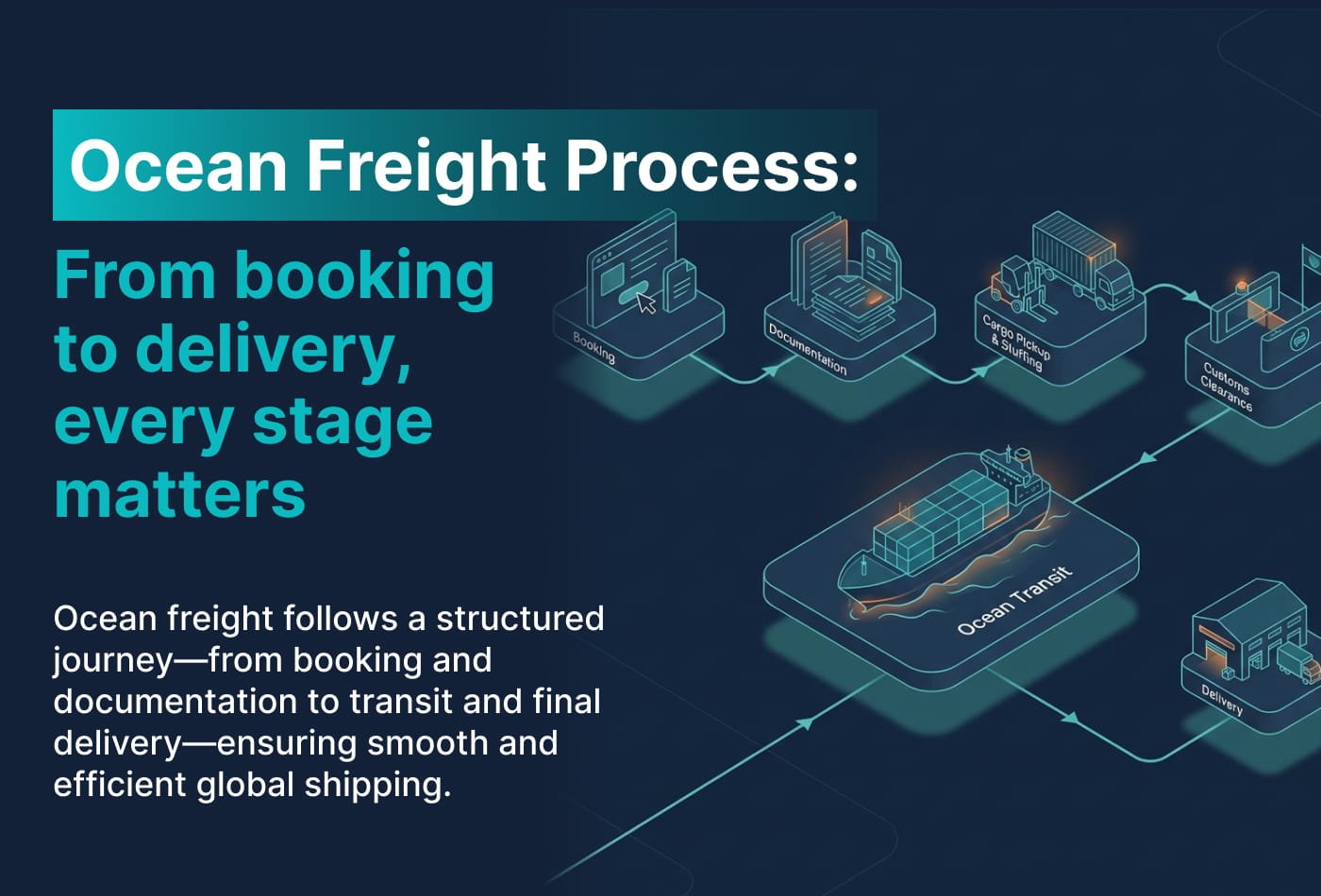
Understanding the end-to-end shipping journey is essential for businesses involved in international trade. The ocean freight process involves multiple stages, each requiring careful coordination to ensure timely and efficient delivery of goods.
From booking to final delivery, here’s a step-by-step breakdown of how ocean freight works.
Booking the Shipment
The process begins with booking the shipment through a freight forwarder or carrier. At this stage, the shipper provides key details such as:
- Type and volume of cargo
- Origin and destination ports
- Preferred shipping dates
- Type of container required (FCL or LCL)
Based on this information, the service provider suggests the best route, transit time, and pricing. Once confirmed, space is reserved on a vessel, and the shipment is scheduled.
Documentation and Paperwork
Documentation is a critical part of ocean freight shipping, ensuring compliance with international trade regulations.
Common documents include:
- Bill of Lading (B/L): Serves as a contract of carriage and proof of shipment
- Commercial Invoice: Details the value and description of goods
- Packing List: Provides information about packaging and contents
- Export/Import Licenses: Required for regulated goods
- Certificate of Origin: Indicates where the goods were manufactured
Accurate documentation helps avoid delays, penalties, or shipment holds during transit.
Cargo Pickup and Container Stuffing
Once documentation is in place, the cargo is picked up from the shipper’s location and transported to a warehouse or container yard.
Key steps include:
- Cargo Inspection: Ensuring goods are properly packed and labeled
- Container Stuffing: Loading goods into containers securely to prevent damage
- Sealing the Container: Applying seals for safety and compliance
For LCL shipments, goods from multiple shippers are consolidated into a single container, while FCL shipments use a dedicated container.
Customs Clearance
Customs clearance is conducted at both the origin and destination ports.
Export Customs Clearance:
- Submission of shipping documents to authorities
- Verification of cargo details
- Approval for export
Import Customs Clearance:
- Assessment of duties and taxes
- Inspection (if required)
- Release of goods for delivery
Efficient customs handling is crucial to avoid delays and ensure smooth cargo movement across borders.
Conclusion
The ocean freight process involves multiple interconnected steps, from booking and documentation to cargo handling and customs clearance. Each stage plays a vital role in ensuring that shipments reach their destination safely and on time.
By understanding this process, businesses can better plan their logistics, minimize risks, and improve overall supply chain efficiency. Leveraging the right partners and tools further enhances visibility and control, making ocean freight a reliable solution for global shipping needs.
Share Your Thoughts
Post


 Continue with Google



 Get instant quote
and compare offers in real time
Get instant quote
and compare offers in real time