Transit time is one of the most critical factors in global logistics planning. For businesses relying on sea freight shipping, understanding how long shipments take across different routes helps in better inventory management, customer communication, and cost optimization.
In this guide, we break down ocean freight transit times, key influencing factors, and ways to reduce delays.
What is Ocean Freight Transit Time?
Ocean freight transit time refers to the total time taken for cargo to move from the origin port to the destination port. It includes:
- Vessel sailing time
- Port handling and transshipment delays
- Customs clearance processes
- Inland transportation (in some cases)
Transit time can vary widely depending on shipping routes, carrier schedules, and external conditions like weather or port congestion.
Average Transit Time by Region
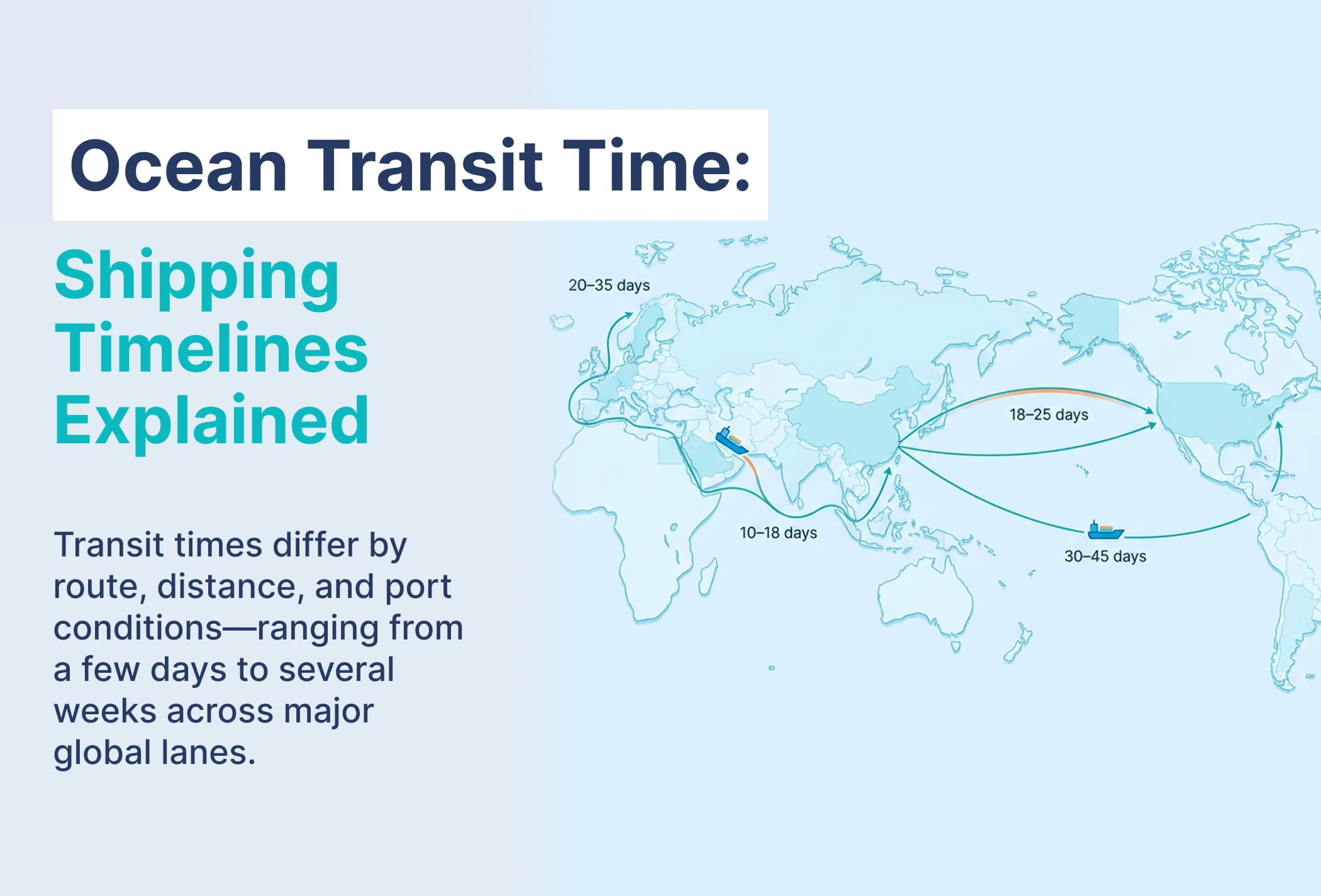
While exact timelines depend on carriers and routes, here are general transit time estimates across major trade lanes:
- Asia to Middle East: 10–18 days
- Asia to Europe: 20–35 days
- Asia to North America (West Coast): 18–25 days
- Asia to North America (East Coast): 30–45 days
- Europe to North America: 10–20 days
- Intra-Asia: 5–12 days
These timelines may increase if the shipment involves transshipment (cargo transferred between vessels) or if there are disruptions at ports.
How to Reduce Shipping Time
Although ocean freight is inherently slower than air freight, businesses can take steps to minimize delays:
- Choose Direct Routes: Avoid transshipment wherever possible
- Plan Early Bookings: Secure space on vessels in advance
- Work with Reliable Carriers: Select partners with consistent schedules
- Ensure Accurate Documentation: Prevent customs-related delays
- Track Shipments in Real-Time: Stay informed and act quickly on disruptions
- Optimize Port Selection: Use less congested ports if feasible
Proactive planning and the right logistics strategy can significantly improve delivery timelines.
Real-Life Shipping Timeline Example
Here’s a typical example of an ocean freight shipment from Shanghai (China) to Nhava Sheva (India):
- Day 1–3: Cargo pickup and container stuffing
- Day 4–6: Export customs clearance and port handling
- Day 7–20: Ocean transit
- Day 21–24: Import customs clearance
- Day 25–28: Final delivery to consignee
Total Estimated Time: ~25–28 days
This example highlights how transit time includes multiple stages beyond just the time spent at sea.
Conclusion
Ocean freight transit time depends on various factors, including route, carrier, port efficiency, and external conditions. By understanding average timelines and planning shipments strategically, businesses can better manage expectations and avoid costly delays.
Leveraging the right tools and partners ensures improved visibility, smoother operations, and more reliable delivery schedules—making sea freight a dependable option for global trade.
Share Your Thoughts
Post


 Continue with Google



 Get instant quote
and compare offers in real time
Get instant quote
and compare offers in real time