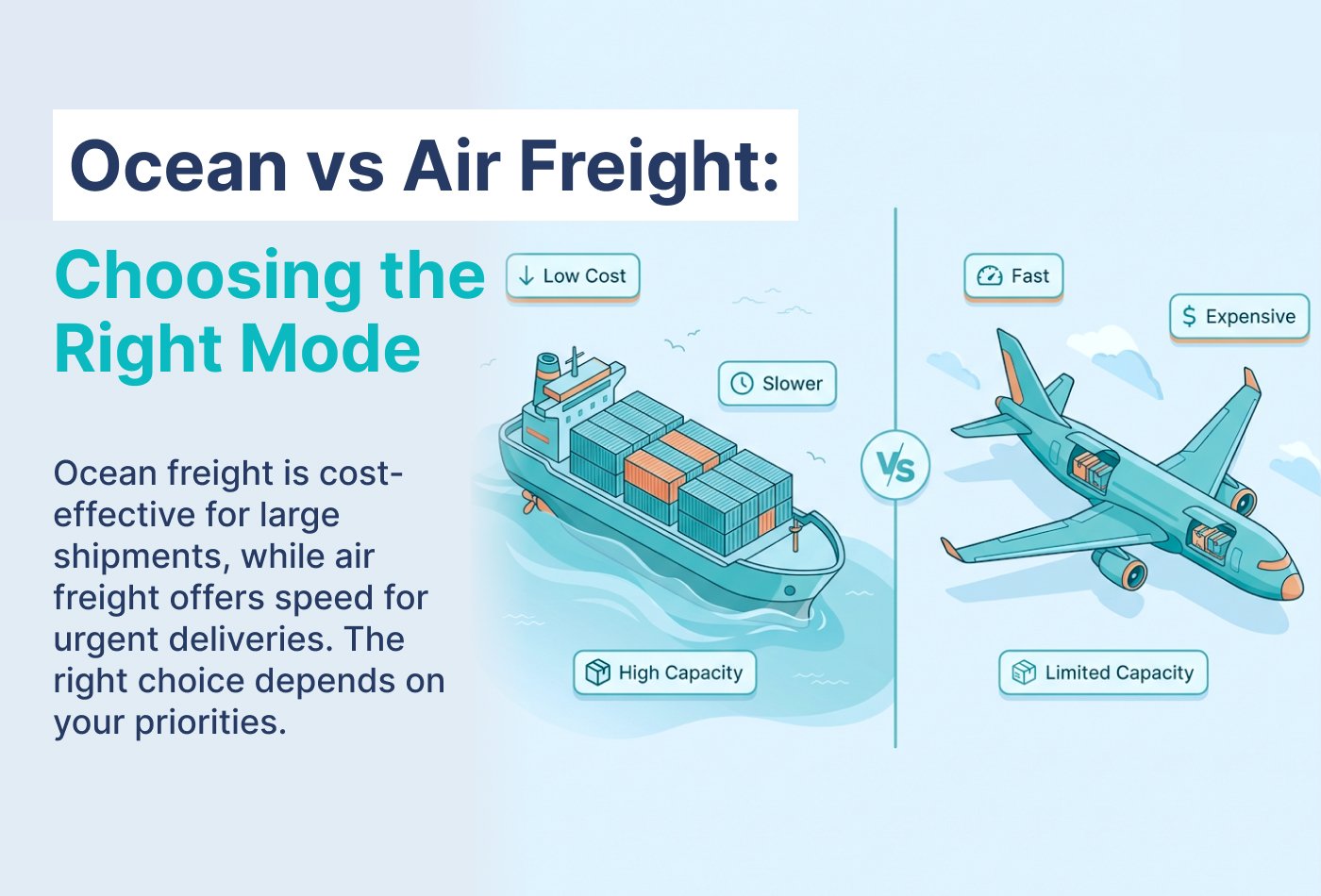
Choosing between ocean freight and air freight is a critical decision for importers and exporters. Each mode of transportation offers unique advantages depending on factors like cost, speed, cargo type, and urgency. Understanding the differences can help businesses optimize their logistics strategy and improve overall supply chain efficiency.
Key Differences Between Ocean Freight and Air Freight
The primary differences between ocean freight and air freight lie in cost, transit time, and cargo capacity:
- Cost: Ocean freight is significantly more economical, especially for bulk shipments, while air freight is more expensive due to higher fuel and operational costs.
- Speed: Air freight is the fastest mode of transport, often delivering goods within days. Ocean freight, on the other hand, can take weeks depending on the route.
- Capacity: Ships can carry large volumes, making ocean freight ideal for heavy and oversized cargo. Aircraft have limited space and weight restrictions.
- Reliability: Air freight tends to have more predictable schedules, while ocean freight can be affected by port congestion and weather conditions.
- Environmental Impact: Ocean freight has a lower carbon footprint per ton compared to air freight.
Businesses must weigh these factors carefully based on their shipping priorities.
Pros and Cons of Ocean Freight
Using sea freight offers several advantages, particularly for large-scale shipments.
Pros:
- Cost-Effective: Ideal for transporting large volumes at a lower cost per unit.
- High Capacity: Suitable for heavy, bulky, or oversized goods.
- Versatility: Can handle a wide range of cargo, including hazardous and refrigerated goods.
- Eco-Friendly: Lower emissions compared to air transport.
Cons:
- Slower Transit Time: Shipments can take several weeks to reach their destination.
- Potential Delays: Port congestion, weather, and geopolitical factors can impact schedules.
- Complex Logistics: Requires coordination across multiple stages, including ports and inland transport.
Pros and Cons of Air Freight
Air freight is often chosen for speed and reliability, especially for time-sensitive shipments.
Pros:
- Fast Delivery: Ideal for urgent shipments with tight deadlines.
- High Reliability: Fixed schedules and fewer delays compared to ocean shipping.
- Better Security: Airports have strict security measures, reducing risk of theft or damage.
- Lower Inventory Costs: Faster transit reduces the need for large inventory storage.
Cons:
- Higher Cost: Significantly more expensive than ocean freight.
- Limited Capacity: Not suitable for very large or heavy shipments.
- Environmental Impact: Higher carbon emissions per ton of cargo.
- Restrictions: Certain hazardous materials may face stricter regulations.
When to Choose Ocean Freight Services
Ocean freight is the better option in the following situations:
- When shipping large quantities or heavy cargo
- When cost savings are more important than speed
- For non-urgent deliveries with flexible timelines
- When transporting goods across long international routes
- For cargo that fits well into containerized shipping (FCL or LCL)
On the other hand, air freight is best suited for high-value, time-sensitive, or perishable goods where speed is critical.
Conclusion
Both ocean freight and air freight play essential roles in global logistics, and the right choice depends on your specific business needs. If your priority is cost efficiency and high-volume shipping, ocean freight is the ideal solution. However, if speed and reliability are critical, air freight may be worth the higher expense.
By understanding the strengths and limitations of each method, businesses can make informed decisions, reduce logistics costs, and improve overall supply chain performance.
Share Your Thoughts
Post


 Continue with Google



 Get instant quote
and compare offers in real time
Get instant quote
and compare offers in real time