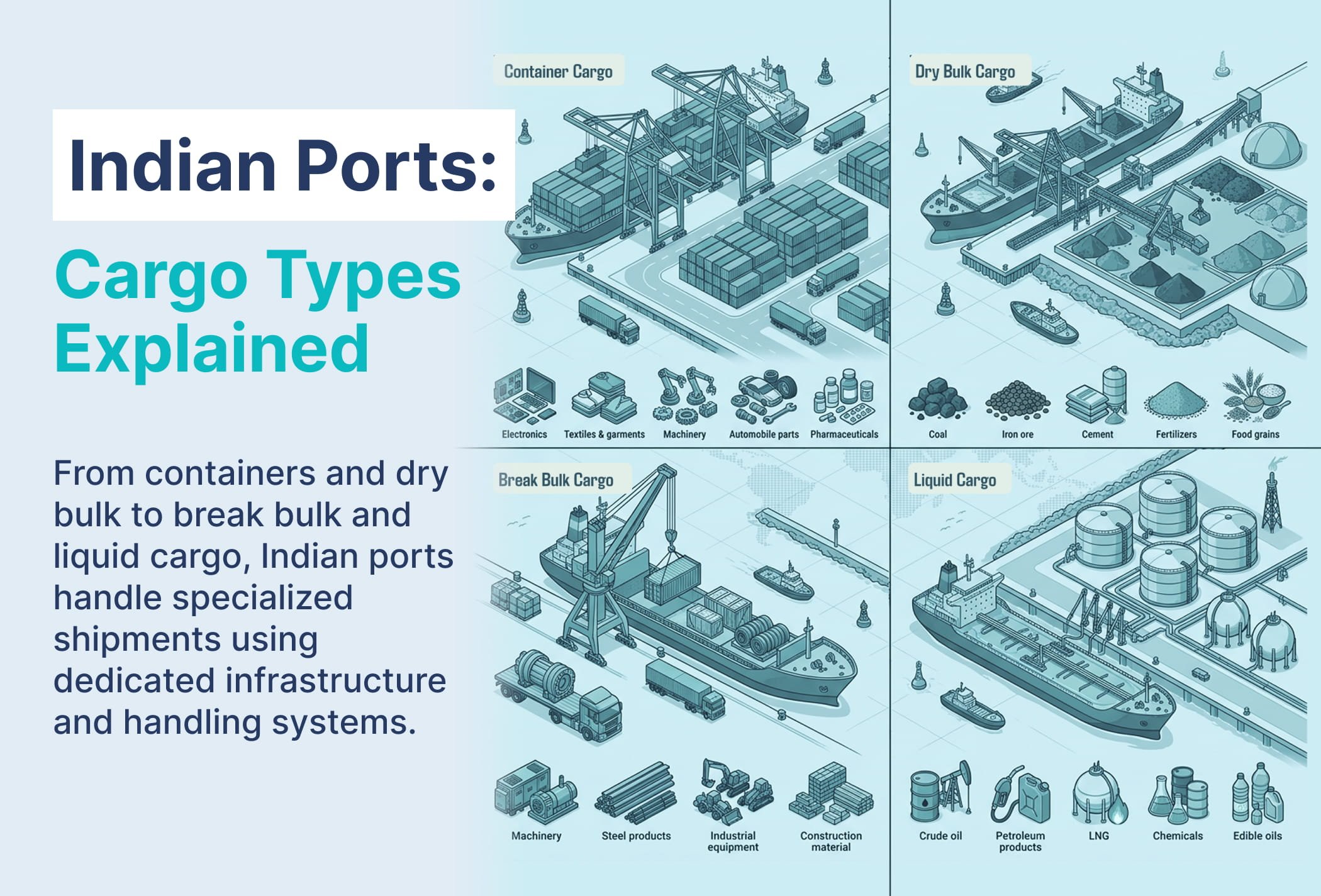
Indian ports handle a wide variety of cargo that supports both domestic industries and international trade. From containers carrying consumer goods to massive bulk shipments of coal and crude oil, ports are designed to manage different cargo categories efficiently. Many of the largest ports in India are equipped with advanced infrastructure to handle high cargo volumes across multiple industries.
Each cargo type requires specific infrastructure, storage facilities, handling equipment, and transportation systems. This is why some ports specialize in containers, while others focus on bulk commodities, petroleum products, or industrial cargo.
Understanding the different types of cargo handled at Indian ports helps businesses choose the right shipping strategy and port facilities for their logistics requirements.
Container Cargo
Container cargo is one of the most common forms of cargo movement in global trade. Goods are packed into standardized containers that can be easily transported through ships, trucks, and railways.
Containerization has transformed the logistics industry by improving:
- Cargo safety
- Shipment tracking
- Loading and unloading speed
- Multimodal transportation efficiency
Common Goods Moved Through Containers
Container cargo includes:
- Electronics
- Textiles and garments
- Machinery
- Automobile parts
- Consumer goods
- Pharmaceuticals
- Retail products
Ports handling large container volumes usually have:
- Container terminals
- Automated cranes
- Large container yards
- Container freight stations
Container ports are especially important for export-import businesses because they provide faster cargo handling and better shipment visibility.
Bulk Cargo
Bulk cargo refers to goods transported in large quantities without packaging. This type of cargo is usually loaded directly into the ship’s cargo hold.
Bulk cargo is divided into two categories:
- Dry bulk cargo
- Break bulk cargo
Dry Bulk Cargo
Dry bulk cargo includes:
- Coal
- Iron ore
- Cement
- Fertilizers
- Food grains
These commodities require specialized infrastructure such as conveyor systems, silos, and heavy-duty loading equipment.
Break Bulk Cargo
Break bulk cargo includes oversized or individually loaded goods such as:
- Machinery
- Steel products
- Industrial equipment
- Construction material
Ports handling bulk cargo usually focus on industrial and energy sectors because these industries move cargo in massive volumes.
Liquid Cargo
Liquid cargo includes petroleum products, chemicals, liquefied natural gas (LNG), and edible oils. These shipments require highly specialized terminals and safety systems.
Unlike container or dry bulk cargo, liquid cargo moves through:
- Pipelines
- Storage tanks
- Pumping systems
Common Liquid Cargo Types
Indian ports handle several liquid commodities, including:
- Crude oil
- Petroleum products
- LNG
- Chemicals
- Liquid fertilizers
- Edible oils
Ports handling liquid cargo follow strict safety and environmental regulations because these products can be hazardous if not managed properly.
Importance of Liquid Cargo Ports
Liquid cargo terminals are critical for:
- Energy supply chains
- Oil refineries
- Chemical industries
- Industrial manufacturing
These ports play a major role in supporting India’s growing industrial and energy demand.
Which Ports Specialize in Which Cargo
Different ports in India specialize in different cargo categories based on infrastructure, geographic location, and industrial demand.
Container-Focused Ports
Ports with strong container infrastructure are preferred for:
- Retail exports
- Consumer goods
- E-commerce shipments
- Manufacturing industries
- These ports usually offer:
- Faster turnaround times
- Advanced tracking systems
- Better shipping connectivity
Bulk Cargo Ports
Bulk cargo ports are commonly linked with:
- Mining regions
- Power plants
- Steel industries
- Heavy manufacturing zones
Their infrastructure is designed for high-volume industrial cargo movement.
Liquid Cargo Ports
Ports handling petroleum and chemicals often develop near:
- Oil refineries
- Petrochemical industries
- Energy hubs
These ports require advanced storage and safety systems.
Multi-Purpose Ports
Some major Indian ports handle multiple cargo categories, including:
- Containers
- Bulk cargo
- Liquid cargo
- Automobile shipments
These ports support a wide range of industries and trade activities.
Explore Ports Leading in Cargo Handling
India’s major ports play a significant role in handling millions of tonnes of cargo every year. Some ports dominate container traffic, while others lead in petroleum products, coal movement, or industrial cargo handling.
The cargo specialization of a port directly affects:
- Operational efficiency
- Cargo turnaround time
- Shipping connectivity
- Logistics cost
Businesses involved in international trade should understand which ports are best suited for their cargo type before planning shipments.
As India’s trade volume continues to grow, ports are becoming more specialized and technologically advanced. Choosing the right cargo handling port can help businesses improve shipment efficiency, reduce delays, and strengthen supply chain performance.
Share Your Thoughts
Post


 Continue with Google



 Get instant quote
and compare offers in real time
Get instant quote
and compare offers in real time