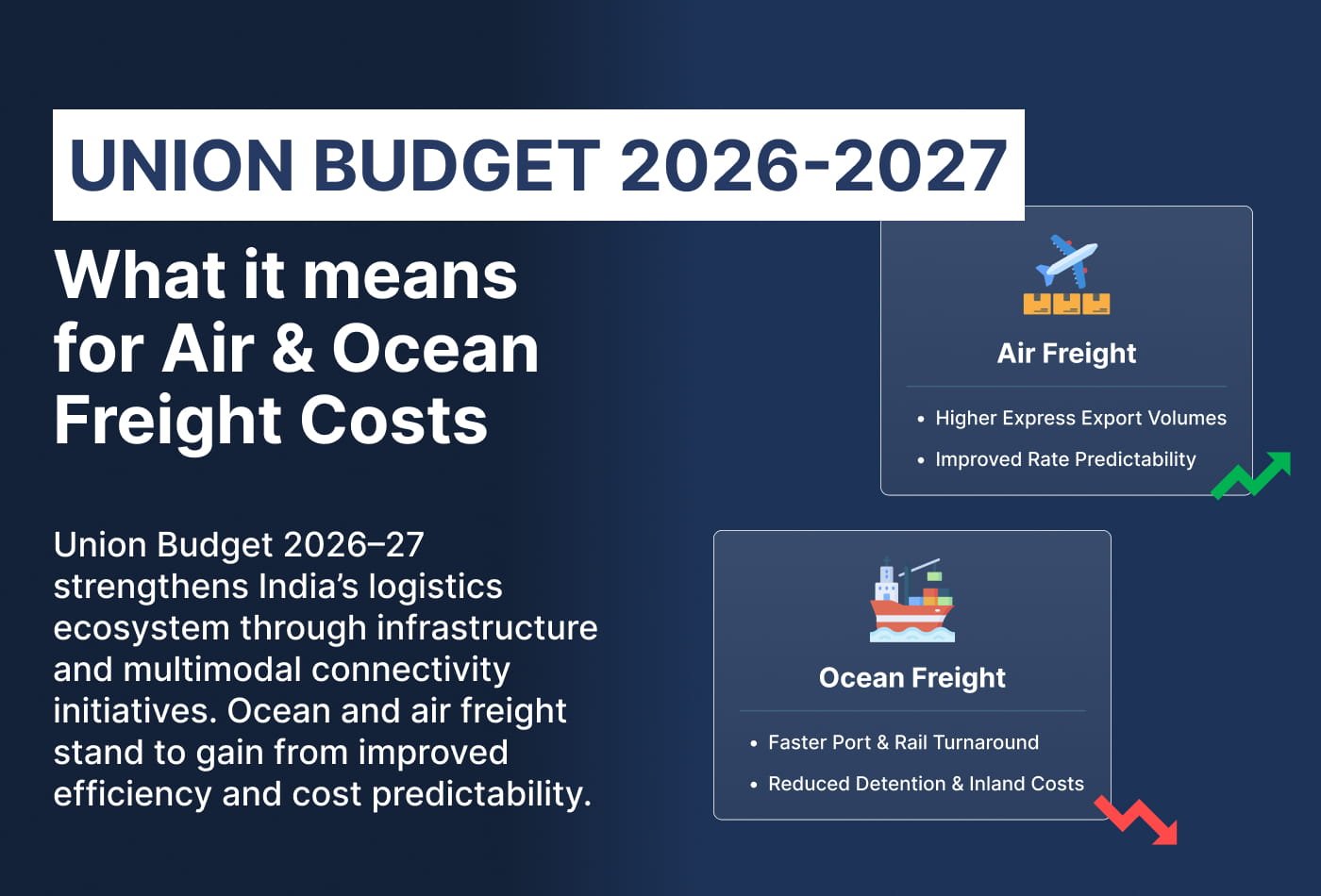
The Union Budget 2026-27, presented on 1 February 2026, introduced structural initiatives to transform India’s logistics ecosystem — making freight — both ocean and air — more efficient, cost-predictable, and globally competitive. This article explores how these measures shape budgeting specifically for ocean and air freight logistics.
Ocean Freight & Logistics Budget Impacts
1. Infrastructure Investment Reduces Freight Costs
Capital expenditure of ₹12.2 lakh crore for transport infrastructure shapes freight cost structures long-term. Upgraded ports, rail connectivity, and multimodal corridors improve cargo velocity — reducing container dwell times and associated charges.
Budget Effects on Ocean Freight Budgeting
- Faster turnaround times lower detention/demurrage risks, which are usually outside base freight rate calculations.
- Improved hinterland connectivity cuts inland transport costs — often a significant portion of total door-to-door ocean freight spend.
- Predictable infrastructure spending timelines help planners forecast logistics lead times more accurately.
Boost to Inland Waterways & Coastal Shipping
The rollout of 20 new national waterways over the next five years and a coastal cargo incentive scheme aims to shift freight from roads and rail to waterways — typically cheaper freight routes.
Budgeting Benefits
- Waterway freight often carries lower fuel and handling costs than road/rail — improving overall ocean freight budget effectiveness.
- Planners can evaluate modal shifts (sea + waterway) to reduce total logistics spend.
Domestic Container Manufacturing Support
With a ₹10,000 crore Container Manufacturing Assistance Scheme, the government aims to boost local container production and reduce global supply chain dependencies.
Impact on Ocean Freight Costs
- Higher container availability reduces spot rate volatility and shortage premiums — a key ocean logistics cost driver.
- Smoother equipment (container) flows can reduce repositioning fees.
- Budgeting Tip: Include potential savings from long-term container price stabilization when forecasting ocean freight line rates and lease costs.
Air Freight & Express Logistics Financial Impacts
1. Removal of Courier Export Value Cap
The Budget removed the ₹10 lakh per consignment cap on courier exports, boosting international express logistics volumes.
Air Freight Budget Takeaways
- Forwarders can plan for higher export volumes without the previous regulatory ceiling.
- Growth in express freight volumes may also strengthen carrier competition — potentially softening rates.
Customs Duty Exemptions for Aviation Components
Exempting customs duty on certain aviation components reduces MRO costs and total operating expenses for carriers, indirectly supporting air freight cost predictability.
Integrating Budget Measures into Freight Logistics Budgets
A modern freight logistics budget must now reflect structural policy shifts, not just price forecasts:
1. Align Forecasting with Infrastructure Initiatives
Ports, freight corridors, and waterways data now directly influence lead times and often reduce variable surcharges tied to congestion.
2. Evaluate Modal Shifts
Incorporate potential cost savings from routes using inland waterways and coastal shipping in ocean freight models.
3. Factor in Digital & Regulatory Reforms
Customs and warehousing reforms may reduce hold times and warehousing stays, lowering inventory carrying cost assumptions.
4. Adjust for Express Air Logistics Growth
Rapid growth in air express volumes may translate to better slot availability — include air freight diversification in budget simulations.
Conclusion: Budget 2026-27 Sets a Foundation for Smarter Freight Spending
The Union Budget 2026-27 marks a pivotal moment for logistics planners looking to tighten total freight budgets — whether ocean or air — by leveraging government-backed infrastructure expansion, modal diversification, container cost stabilization, and regulatory reforms.
By building these national budget priorities into freight cost models, supply chain teams can forecast total landed costs more accurately, negotiate better contracts, and reduce risk from volatility — ultimately enabling cost-efficient, resilient logistics operations.
Share Your Thoughts
Post


 Continue with Google



 Get instant quote
and compare offers in real time
Get instant quote
and compare offers in real time