Ocean freight shipping refers to the transportation of goods via cargo ships across international waters. It is one of the most widely used methods for global trade, especially for moving large volumes of goods over long distances.
Businesses rely on ocean freight because it offers a cost-effective and reliable solution compared to other modes like air freight. Goods are typically shipped in containers, which are standardized for easy handling across ships, ports, and inland transport systems.
There are two primary types of ocean freight:
- FCL (Full Container Load): A single shipper uses the entire container. Ideal for large shipments.
- LCL (Less than Container Load): Multiple shippers share a container. Suitable for smaller shipments.
Ocean freight is commonly used for commodities such as machinery, textiles, electronics, and raw materials.
How Ocean Freight Shipping Works
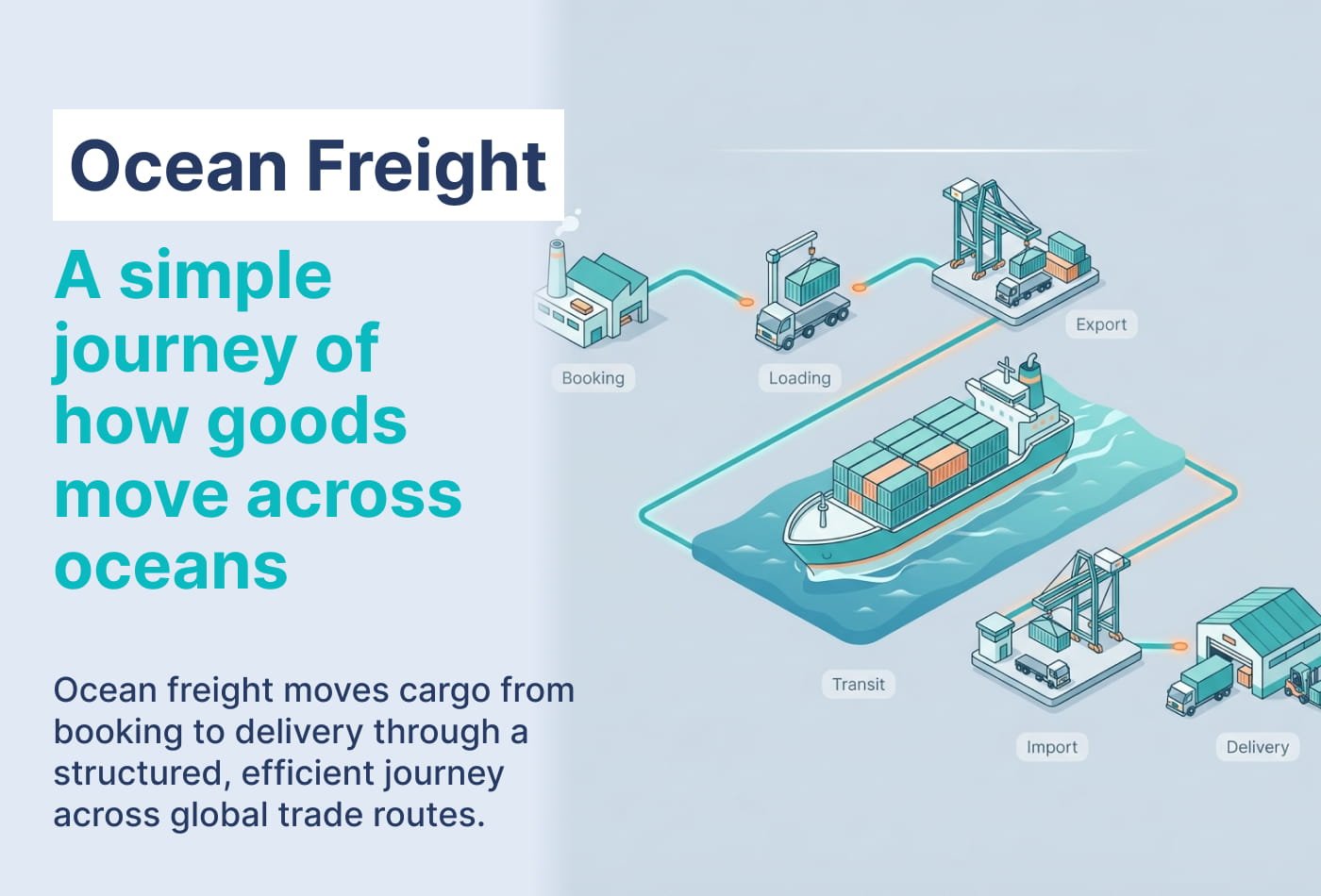
Ocean freight shipping involves a structured process with multiple stages:
1. Booking the Shipment
The shipper books space with a carrier or freight forwarder based on cargo volume, destination, and timeline.
2. Container Loading
Goods are packed and loaded into containers at the origin warehouse or a consolidation facility (for LCL shipments).
3. Inland Transportation
The container is transported to the port via trucking or rail.
4. Customs Clearance (Export)
Documentation is submitted, and the cargo is cleared for export by customs authorities.
5. Ocean Transit
The container is loaded onto a vessel and transported to the destination port.
6. Customs Clearance (Import)
Upon arrival, the shipment undergoes import customs clearance.
7. Final Delivery
The container is transported from the port to the consignee’s location.
This end-to-end process can take anywhere from a few days to several weeks, depending on distance, route, and external factors like weather or port congestion.
Benefits of Ocean Freight Shipping
Ocean freight remains the backbone of international trade due to several key advantages:
1. Cost-Effectiveness
It is significantly cheaper than air freight, especially for bulk shipments.
2. High Capacity
Cargo ships can carry large volumes, making it ideal for heavy and oversized goods.
3. Versatility
Ocean freight supports a wide range of cargo types, including hazardous, refrigerated, and oversized goods.
4. Environmental Efficiency
Compared to air transport, shipping by sea has a lower carbon footprint per ton of cargo.
5. Global Reach
Ocean freight connects major ports worldwide, enabling seamless international trade.
When Should You Choose Ocean Freight?
Ocean freight is the best choice in the following scenarios:
- When shipping large or heavy cargo
- When cost savings are a priority over speed
- For non-urgent shipments with flexible timelines
- When transporting goods internationally across continents
- For commodities that require containerized shipping
However, for time-sensitive shipments, businesses may consider air freight despite the higher cost.
Conclusion
Ocean freight shipping plays a critical role in global logistics by offering a cost-effective, scalable, and reliable way to transport goods across international markets. Whether you are an importer or exporter, understanding how ocean freight works can help you make better shipping decisions, optimize costs, and improve supply chain efficiency.
As global trade continues to evolve, leveraging the right shipping method—like ocean freight—can give your business a strong competitive advantage.
Share Your Thoughts
Post


 Continue with Google



 Get instant quote
and compare offers in real time
Get instant quote
and compare offers in real time